As a trainer you always get into discussions, when going over weight loss goals, about what areas a person wants to lose fat from. It's hard, from the outset, and at an initial consultation, to know just how much depth to go into regarding this subject, and just how to tell a client that all preconceptions they have about weight loss, are wrong. There is a general census within the fitness industry that spot specific fat reduction is a myth, this is mostly supported by evidence (though, apparently not), spot specific fat reduction refers to the concept of stripping fat from predetermined areas of the body (usually trouble areas such as glutes, stomach, thighs etc). Strength and conditioning coach Charles Poloquin believes it is possible to spot specific fat reduce, but he is in the minority. It's important to note he is selling a product advertising this in his "bio signature modulation" program that, from what I understand, targets hormonal concerns. The reason he targets the endocrine response is largely due to the supposition that hormones such as insulin, cortisol, testosterone, estrogen, thyroid and growth all effect fat distribution and storage (which they do). I'd say the complication comes from whether or not his program actually works, and the testimonials certainly seem positive. That aside, the idea of specifically doing exercises to strip fat from specific areas is largely unsupported, Poliquin's bio signature program is a highly tailored, intensive program that requires special training and measures to implement (as well as costing $$$). Your average person who trains needs to focus on the basics, a proper diet and a well balanced training regiment (I put them in order of importance), worrying about hormonal concerns is valid, and I would almost always recommend a hormone level check up, especially for women (those who, in particular suffer from a "pear" shape) but isn't the focus for your average joe. Alwyn Cosgrove in his manual "the science of fat loss" touched briefly on spot specific fat reduction, claiming it is possible, but there is little evidence thus far (though he did provide some), definitely something to keep an eye on.
Largely, when talking to clients, I wouldn't support the notion that spot specific fat reduction being possible, if only for argument and continuity's sake, not in the quantities of weight most of you are looking for. Clients don't need to get bogged down in technical and often contradictory meta analysis of the data being produced. It's not uncommon during weight loss plans to feel stagnant when in actuality you're just losing fat from places you can't see. The point I'm making is, selling spot specific fat reduction as a fact sells unrealistic expectations and can cause the client to foucs on specific parts of their body when training on the whole would be more beneficial. Specific work can be added to certain areas on top of their program if needed.
I'm more than willing to accommodate a clients needs for spot specific fat reduction as I've found, psychologically, when a person feels like they're getting results, it can be just as motivating for them, as if they actually were. Nobody likes to hear 'eh sorry that's a myth", but the larger focus of my programs rely on burning the most amount of calories in the extremely short amount of time we have together, while getting the client to reduce the harmful activities they're doing to themselves. To the women out there who have that extra weight on the aforementioned adipocytes, and who do perhaps suffer from a pear shape (the male equivalent is an "apple" shape) I would suggest following a low carb diet with high intensity weight training and HIIT, simply working those areas won't cut it.
Friday, September 24, 2010


Monday, September 13, 2010
Rep Ranges.
A client of mine suggested this as a topic for discussion and I think the idea of "how much weight to lift" and "for how many reps" are important issues that I don't think I've covered in enough detail. If you're training with me, then weights are a staple part of your routine, and I think I've addressed why that is. But it's the amount of weight and the progression thereof that I think some of you are sometimes confused with.
For weights to have a positive benefit, they need to be heavy, you need to be failing just before or on the final rep allotted. Metabolic resistance work usually has what might be considered "high" rep ranges, usually in the 12-15 area, and usually progressing down to a lower rep range (8-10). None of these rep ranges are considered pure "strength" work (3-5), but that isn't to say you don't get strength gains from them. I would never, ever recommend lifting light, even if you're lifting for 15 reps (why train to be weak?), you should be lifting heavy, and lifting heavier every week. That's something I want to spend a moment on, some of you complain that I make the weights harder every week, but maybe I haven't explained why I do that? The benefit from metabolic weight training comes from the disturbance it creates in your metabolism, but the body being the way it is, it's highly adaptive. By simply making sure we are increasing the weights every workout, is a cheeky little way we can maximise your potential to boost metabolism and grow or retain muscle mass, by shocking up your system and keeping your body constantly guessing. That's also why we never spend more than 4 weeks doing the same thing and why every program is progressively more difficult. It's called progressive intensity and is one of the staple variables a trainer can manipulate to get our fat loss goals. The point is, unless you're in a rehab setting, in which case you wouldn't be lifting weights at all, there's no reason not to lift heavy (as heavy as you can within rep ranges prescribed).
This idea that women should train with light weights for fear of getting "bulky" represents a huge misunderstanding of biology, diet and training. I have no idea where this myth comes from, but training light will just mean you get no results, no bulking sure, but no weight loss or muscle growth, nothing! Getting "bulky" is a result of intensive bodybuilder style training (which I can guarantee none of you are doing) and a caloric surplus (timed protein, carbs, sleep and no alcohol. How many of you can claim this type of lifestyle?). I trained my ass off, thinking only of gaining muscle for years and still didn't gain that much, I love the hubris some people have, the idea that if they touch a weight they'll get "bulky". Heavy weights within caloric restriction will only create density in your muscle, and possibly a slight increase in muscle, if you're eating well you will lose fat to juxtapose the gain in muscle. There are certain hormonal factors that contribute to muscle growth, namely that of testosterone, women produce less than men, that isn't to say women don't produce it and can't gain muscle, because they do, and they can. But the nature is in the expression of that effect, they produce less hence the effect will be less, so ladies, don't worry about lifting weights heavy and frequently, the programs you are on are designed to promote and maintain muscle mass under conditions of physical stress and caloric restriction (as we all know muscle is your metabolism, more muscle= greater metabolism= greater fat loss).
This idea that women should train with light weights for fear of getting "bulky" represents a huge misunderstanding of biology, diet and training. I have no idea where this myth comes from, but training light will just mean you get no results, no bulking sure, but no weight loss or muscle growth, nothing! Getting "bulky" is a result of intensive bodybuilder style training (which I can guarantee none of you are doing) and a caloric surplus (timed protein, carbs, sleep and no alcohol. How many of you can claim this type of lifestyle?). I trained my ass off, thinking only of gaining muscle for years and still didn't gain that much, I love the hubris some people have, the idea that if they touch a weight they'll get "bulky". Heavy weights within caloric restriction will only create density in your muscle, and possibly a slight increase in muscle, if you're eating well you will lose fat to juxtapose the gain in muscle. There are certain hormonal factors that contribute to muscle growth, namely that of testosterone, women produce less than men, that isn't to say women don't produce it and can't gain muscle, because they do, and they can. But the nature is in the expression of that effect, they produce less hence the effect will be less, so ladies, don't worry about lifting weights heavy and frequently, the programs you are on are designed to promote and maintain muscle mass under conditions of physical stress and caloric restriction (as we all know muscle is your metabolism, more muscle= greater metabolism= greater fat loss).
Monday, September 6, 2010
Supplements.
In this blog I'll be discussing, primarily bodybuilding supplements, but what is said herein could just as easily be applied to most supplements on the market, but please be charitable when reading this post and not jump to any conclusions about supplements not specifically mentioned.
Something the supplement business does really well is marketing, they have saturated bodybuilding magazines to the point that their products catchy names are common knowledge. But, the problem is (as with any pseudoscience) there is very little evidence (other than anecdotal) to support the efficacy of supplements. Which isn't to say that you should avoid them all, there are, however certain supplements that you should use such as: fish oil, protein powders and creatine. Most of the other supplements: HMB, L-Carnitine, Growth powders, glutamine are not proven to work, or in terms of cost/benefit ratio, are impractical. The major supplement companies and their products are mostly extremely over priced doses of sugar, caffeine, creatine, protein, additives and preservatives.
The problem that we find with supplements and their marketing, is people tend to favour them over good nutrition, which is obviously not the way to go. The term "supplement" implies that it is meant to supplement a good diet and training program, but most people I see who religiously use supplements have anything but perfect diets and training programs.
So, I guess we should tackle the question of who should use these products? (when I say "these products" I mean any other than protein, fish oil and creatine). I would say bodybuilders for the most part, and I mean competing bodybuilders, and even then, the incidence of drug use in that culture makes discerning what is drugs and what is supplement, hard to do. You're average (average in this case meaning: non competing athlete, recreational athlete etc) trainer should only be using the aforementioned supplements, generally.
Why do I promote fish oil, protein and creatine? Well these all have evidential support, from reuptable sources to back them up and are generally accepted as the only supplements that are guaranteed to have a positive effect (obviously protein was never under suspicion). Fish oil is great for brain power (increasing attention, reducing likelihood of mental illness), particularly for those of you who aren't eating fish on a daily basis. It has also been demonstrated to be beneficial in weight loss programs. Creatine is also well reviewed and backed up by evidence for helping muscle activation and muscle gain, for those clients who are looking to put on muscle I would recommend creatine once you've been on a program for a couple of months, have your diet sorted out and are looking for an extra edge.
Basically a lot of the hype regarding supplements is just that! You can't substitute the right knowledge and know how for a wonder pill or powder. Most of the effect from supplements is placebo based (in your head), which may be ok except for the ridiculous prices you pay for supplements.
I buy my protein from http://www.myopure.com.au/
I'm pretty sure you can get fish oil and creatine from this site too.
Studies
Protein/carbs post workoout
Betts J.A., Williams C., (2010). Short-term recovery from prolonged exercise: exploring the potential for protein ingestion to accentuate the benefits of carbohydrate supplements. Sports Medicine. 1;40(11):941-59
Jentjens R,. Jeukendrup A., (2003). Determinants of post-exercise glycogen synthesis during short-term recovery. Sports Medicine. 33(2):117-44.
Fish oil
Noreen E.E., Sass M.J., Crowe M.L., Pabon V.A., Brandauer J., Averill L.K., (2010). Effects of supplemental fish oil on resting metabolic rate, body composition, and salivary cortisol in healthy adults. Jounral of the International Society of Sport Nutrition. Oct 8;7:31.
Weed H.G., Ferguson M.L., Gaff R.L., Hustead D.S., Nelson J.L., Voss A.C., (2010). Lean body mass gain in patients with head and neck squamous cell cancer treated perioperatively with a protein- and energy-dense nutritional supplement containing eicosapentaenoic acid. Head & Neck.
Creatine
Arciero P.J., Hannibal N.S 3rd., Nindl B.C., Gentile C.L., Hamed J., Vukovich M.D., (2011).
Comparison of creatine ingestion and resistance training on energy expenditure and limb blood flow.
Metabolism: Clinical and Experimental. 50(12):1429-34.
Wednesday, September 1, 2010
Motivation.
Getting into the gym, when you work 40+ hours a week, is difficult, I understand this. In terms of what motivates me? Well, now I've been doing it so long that to NOT do it actually feels wrong, feels weird and I feel lazy. But to you guys out there? I would first start with a specific plan, with a specific goal, in a specific time frame. Get a program going, with a diet and time by which you want to reach your goal (fat loss/ muscle gain.. whatever). Chances are if you're training with me, you have a program, so basically talk to me about what that entails, what you need to do, and also talk to me about your diet, as that's where the real results will come from.
Adam Bornstein tells of his motivation issues:
You need to decide what you want from your time in the gym. Unfocused random personal training sessions aren't going to get it done, aren't even going to make an impact, not in the long run. As I've mentioned previously you need a program with progressions, form and specific modalities, to keep you interested and to keep your body guessing. Running, walking, throwing some weights around occasionally, these things are fine, in the sense that you're moving, but they're not really getting you where you need to be.
Some tactics that you can use to make you get into the gym more often? Micromanagement! Making sure meals are prepared in advance, making sure alarms are set with enough time, to eat, prepare for work and fit in your personal training session/solo training session. Staying on top of your diet should keep you from getting sick, sniffles here and there are fine, but getting so sick you can't train? Shouldn't happen, ever! This comes back to the compilation post, being prepared will make sure that you're always at your allotted sessions, fully awake and ready.
Some tips from Charles Poloquin on successful lifters:
As far as training when you're sick, don't do it! Ever! I'm serious guys, not only do you expose me and the rest of the members to your illness but exercise is central nervous system fatiguing, which means what? When you're sick, you're body is working hard to get rid of it (I'm sure most of you know this, but the symptoms with the flu, are your body's reaction to fighting the illness), and what, you ask, is doing all the work to get rid of the illness? Your central nervous system! If you come into the gym and run yourself down even more, I guarantee you, you will only get sicker. Better to take the time to recover (LOTS of fruit, vegetables and protein). How can you prevent yourself from getting sick in the first place? Fruit/vegetables and protein with every meal, when I hear you guys getting sick, I know you haven't been doing what I require, you know how I know? You ever see me sick? No Have I ever cancelled a session due to illness? No! Why? Cause I'm super human? Puh-lease! I'm like a lil old lady with a zimmer frame, the only difference is, I eat my fruit/vegetables and protein and get the sleep that I need. . . . That is another important factor, sleep, and recovery. As stated above, some of you are doing 40+ hour weeks, kids, mortgages this is all stress, oh and guess what part of the body deals with stress? The CENTRAL NERVOUS SYSTEM! You're body is an integrated and fragile system, working harder than we all give it credit for all the time, I can't encourage recovery enough guys. Getting a nana nap where you can (great for fat loss), reading a book, having a quiet drink with friends . . anything that reduces stress.
References
Bornstein A., (2010). Funk Busting. Retreieved 22/04/2011. http://blogs.menshealth.com/working-out-the-details/funk-busting/2010/04/12/
Poloquin C., The Top Five Habits of Successful Lifters. A few common demoninators from the best athletes to help bring out the best in you. Retrieved 22/04/2011. http://www.charlespoliquin.com/ArticlesMultimedia/Articles/Article/17/The_Top_Five_Habits_of_Successful_Lifters.aspx
Adam Bornstein tells of his motivation issues:
"I have a confession to make: I stopped working out.
Yep, you read it here. The layoff from this blog was no coincidence. The fitness editor stopped exercising. It wasn’t by choice, or plan, or preference. I can share excuses, sob stories, and a dramatic life-changing event that played a role in my absence. But none of it really matters, right? Excuses are lost moments that capture the past (emphasis added). I’m more interested in writing stories that embrace the future. Besides, my reasons are nothing more than a footnote in an endless list of men who have struggled to stay consistent to maintain their own health. For me, what started as a week break, turned into 3, and eventually spilled over into almost two months.
During that time I didn’t shrivel up and become a shell of my former self. My muscle didn’t turn from Dwight Howard into Fat Albert, and I didn’t go back to bench-pressing just the bar. (I swear, this doesn’t really happen) But I did experience failures in my own health: More stress, worse eating habits (as in, I didn’t eat much), sickness, and I had trouble sleeping. My excuses became reasons why I couldn’t work out; when in reality, hitting the gym was the one excuse I should have used to right the ship—or at least provide an anchor until the storm passed and calmer waters returned (emphasis added).
Maybe the break was a blessing in disguise. Most of my friends and colleagues consider me abnormal. It’s not that I’m not pressed for time like everyone else in the world; but going to the gym has never been an issue for me. Not when I travel, break bones, or have to start my day at 4:30 a.m. So a sudden stoppage of my lifetime hobby and full-time occupation provided a new outlook on how the other half lives.
What did I learn?
For one, skipping the gym doesn’t work for me. For the small investment I make (wake up early and spend an hour in the gym), I receive so much more in return. From attitude, to energy, and even my mindset—everything is better when I lift weights. I’m even a more efficient worker (emphasis added). Call it a coincidence, but my brain fires on all cylinders when I lift weights, and there’s even some research to back it up.
But more importantly, I discovered that getting back into the gym after a long break is harder than I thought. It can be humbling, frustrating, and more than anything, it’s hard building up the will to go exercise. Last week, I found myself battling the urge to crawl back into bed rather than head towards the door. I always knew that working out is tough. If it was easy, all of us would look and feel great. But now I have a better understanding of the psychological limitations that might keep your body on the couch, even if your heart wants to be in the gym.
I’m making a change—but don’t call it a comeback. (I’ve been here for years…sorry, couldn’t resist). It’s more like a rebirth. With the help of David Jack, a Men’s Health fitness advisor, I’m going to re-awaken the muscles in my body and start my renaissance. Could I do it on my own? Sure. But DJ is a bright mind with enough energy to jump start a car. Combined with a new experimental diet (details later), I hope to not only recapture what I once had, but become even better than before. After all, I now have a greater appreciation for how much of an accomplishment it actually is to hit the gym regularly.
Over the next several weeks, I’ll share my return to action. The workouts, the struggles, and what I’ll learn from it all. Along the way, feel free to follow the same workouts I’ll post here (they’re a little different) or even share your own workouts, frustrations, or successes. Whatever you choose, I only ask one thing in return: Take care of yourself, and do what it takes to find your way into the gym." (Bornstein 2010).
Some tactics that you can use to make you get into the gym more often? Micromanagement! Making sure meals are prepared in advance, making sure alarms are set with enough time, to eat, prepare for work and fit in your personal training session/solo training session. Staying on top of your diet should keep you from getting sick, sniffles here and there are fine, but getting so sick you can't train? Shouldn't happen, ever! This comes back to the compilation post, being prepared will make sure that you're always at your allotted sessions, fully awake and ready.
Some tips from Charles Poloquin on successful lifters:
1. They value rest. Recently I had dinner with Ed Coan, a legendary world powerlifting champion who set the bar, literally, for his peers. How good was he? He became world powerlifting champion at age 21 in the 181-pound bodyweight division, winning by 138 pounds. In 1991, at 220, he totaled 2,402 (962 squat, 545 bench, 901 deadlift), and to this day his deadlift record has yet to be beat. When lifters faced Ed Coan, the only questions asked were what record he would break and who would take second.
While magazine interviews with such champions often focus on the athletes’ intensity level, the secret that Ed shared with me concerns the exact opposite. Coan says that one of the crucial parts of his training was plenty of rest, including a daily nap. He didn’t offer any peer-reviewed scientific papers to support his contention – although interesting theories are being presented about the value of a daily siesta; it was only common sense: “You don’t recover, you don’t grow!”
2. They do what works for them. I have seen many athletes of comparable Herculean strength develop their abilities with different approaches. Some would swear by short training cycles, and others liked lengthy cycles. For some, such as the Bulgarian weightlifters who often defeated the Big Red Machine from Russia, the way to their super strength was by pyramiding up and down their weights in a single workout, a method called wave loading. Others preferred a series of several sets at peak weights. Despite these radical training differences, there is one trait that all these athletes had in common: body intelligence.
Now, ordinarily, to do things in the same manner as the next guy and yet expect different results is just plain nuts. But lifters like these are “body smart”: If one training method doesn’t work, they try another, until they find the system that works best for them. In effect they learn, mostly through trial and error, the most effective ways to adhere to the principle of overload.
3. They all choose a mentor. Actually one of the bits of advice used by Neuro Linguistic Programming (NLP) disciples such as motivational speaker Anthony Robbins is to find someone who is successful and copy what they do. If you want to be a champion powerlifter, seek out the advice of a powerlifting guru such as Louie Simmons and find out how he trains his world record holders. If you want to be a top strongman, then seek out a top strongman coach such as Art McDermott. And if you can’t visit mentors in person and train under them, at least read their books!
Ed Coan’s mentor was Bill Seno, a former Mr. America in the ’60s who also competed in Olympic weightlifting, a cross-training activity rarely seen today. Seno was as strong as he looked and reportedly bench-pressed 573 pounds, quite an accomplishment in his era! Bill Kazmaier was a former world record holder in powerlifting who dominated the strongman scene for many years. His mentor was powerlifting legend Tony Fitton. Seno and Fitton were individuals who helped Coan and Kazmaier, like many other successful lifters, take the guesswork out of their training.
4. They constantly experiment. Once an athlete’s mentor led them to the right path, every single one of the athletes I’m talking about tried many things to get stronger. This natural curiosity and willingness to experiment and take risks are important concepts.
There’s no such thing as a single, perfect workout for everyone – every system has some effect, and some work better than others. This experimentation with variety is simply part of the training process. I find it frustrating to see so many coaches or organizations claiming that they have the perfect workout system; or to read research studies that compare one set-rep system to another, such as comparing 10x3 to 5x5, which leads readers to conclude that the system in question is the best. In fact, some of the single-set systems in such studies produced results not necessarily because they were superior, but because the athletes using them were overtrained and the lower volume allowed them to rest – a principle called Fatigue masks fitness.
5. They all are great stress managers. In case of unfortunate events or obstacles, successful athletes can see the opportunity in them, instead of the curse. They all have had setbacks, which they used to make themselves even stronger. One obvious case is Lance Armstrong and his victory over cancer and his multiple victories in the Tour de France; there are also many cases of weightlifters who have overcome obstacles.
Bob Bednarski was a US lifter who competed in the ’60s and ’70s, and Yuri Zakharevich from Russia lifted in the ’70s and ’80s. Near the peak of their careers both athletes broke world records, but then both suffered elbow dislocations that many experts thought would end their careers, especially considering the nature of surgery and sports medicine then compared to now. But both men recovered to break numerous world records. Bednarski clean and jerked 486.5 in the 1968 National Championships weighing 247 pounds, and the following year he jerked 525 pounds off the rack. Zakharevich snatched 463 pounds in the 1988 Olympic Games weighing 242 pounds, a lift only a few super heavyweight lifters since then have exceeded. In the words of Friedrich Nietzsche, “What does not destroy me makes me stronger.” (reference: The Top Five Habits of Successful Lifters
A few common demoninators from the best athletes to help bring out the best in you. Charles Poloquin)
As far as training when you're sick, don't do it! Ever! I'm serious guys, not only do you expose me and the rest of the members to your illness but exercise is central nervous system fatiguing, which means what? When you're sick, you're body is working hard to get rid of it (I'm sure most of you know this, but the symptoms with the flu, are your body's reaction to fighting the illness), and what, you ask, is doing all the work to get rid of the illness? Your central nervous system! If you come into the gym and run yourself down even more, I guarantee you, you will only get sicker. Better to take the time to recover (LOTS of fruit, vegetables and protein). How can you prevent yourself from getting sick in the first place? Fruit/vegetables and protein with every meal, when I hear you guys getting sick, I know you haven't been doing what I require, you know how I know? You ever see me sick? No Have I ever cancelled a session due to illness? No! Why? Cause I'm super human? Puh-lease! I'm like a lil old lady with a zimmer frame, the only difference is, I eat my fruit/vegetables and protein and get the sleep that I need. . . . That is another important factor, sleep, and recovery. As stated above, some of you are doing 40+ hour weeks, kids, mortgages this is all stress, oh and guess what part of the body deals with stress? The CENTRAL NERVOUS SYSTEM! You're body is an integrated and fragile system, working harder than we all give it credit for all the time, I can't encourage recovery enough guys. Getting a nana nap where you can (great for fat loss), reading a book, having a quiet drink with friends . . anything that reduces stress.
References
Bornstein A., (2010). Funk Busting. Retreieved 22/04/2011. http://blogs.menshealth.com/working-out-the-details/funk-busting/2010/04/12/
Poloquin C., The Top Five Habits of Successful Lifters. A few common demoninators from the best athletes to help bring out the best in you. Retrieved 22/04/2011. http://www.charlespoliquin.com/ArticlesMultimedia/Articles/Article/17/The_Top_Five_Habits_of_Successful_Lifters.aspx
Tuesday, August 31, 2010
Heart Rate Zones.
Are HR zones a myth?
Heart rate zones, we've all heard of them, all seen the cardio equipment with "HR at 50% max burns "x" % of fat" etc. Well I'm here to tell you that this is a myth. The idea of calculating a hear rate zone for "fat burning" for everyone across the board, is ridiculous as those equations (220-age= Max HR/ 40-60%= fat burning zone) have a plus or minus of 10-15 beats per minute!
A case against HR zone training
Should we even be trying to target fat burning zones? The basis for targeting fat burning zones is based on science from 20 years ago. Basically the theory goes as follows: the lower intensity the exercise the higher percentage of fat you will burn as a major energy source (the higher the intensity, the ratio drops to favouring carbohydrate as a fuel source). One problem with this is our ability to apply reductio ad absurdum to it, meaning we can demonstrate it to be false by taking the idea to an absurd conclusion, as in: "sleeping would be the best form of fat burning exercise", which it may be, but you do not burn enough calories for it to sufficiently tackle fat loss. Another problem with this as stated above, is most people have incorrectly measured their fat burning zone (as the above equation is out of date and inaccurate). Another problem is it doesn't take into account any other factors such as EPOC (Excess Post Exercise Oxygen Consumption) which is basically an oxygen debt that your body has to make up (when doing intense exercise). The way it does this is by raising metabolism (for 24-48hrs post exercise), which means a higher caloric burn at rest! It also doesn't take into account other fat burning process such as catecholamine production and lactic acid production which also raise metabolism. These several example alone should demonstrate the incoherent thought process behind this idea, and the antiquated notion of HR zone training
When you train in a "fat burning zone" you do burn a higher percentage of fat during the session, which is fine, but let's say, as a hypothetical you burn 300 calories in a 1hr steady state session on a x-trainer. Let's assume you burn 170 calories from fat and 130 calories from carbohydrates, that's all well and good, but due to the low intensity nature of the exercise, you haven't raised metabolism at all (some even postulate that steady state, "fat burning" cardio reduces metabolism, hence reducing how many calories you can burn outside the session). The effect is: the calories you burn during the session are all you burn! Now let's say you do a HIIT session, let's suppose you burn 200 calories in a 20 minute session (which is already better), let's say you burn 120 calories of carbohydrates and 80 calories of fat, this is fine for several reasons. (A): you've still burnt 200 calories which at the end of the day is still energy burnt, (B): you've raised your metabolism sufficiently to burn calories (and because you're at rest it will be mostly fat) for the next 24-48hrs and (C): you get less wear and tear on your joints too and have no risk of reducing metabolism through muscle wasting.
Now when training for endurance or for HIIT it's all about getting your HR rate up high, both training modalities require a maximum HR possible while still being able to continue work. The real evidence of health comes from the "bounceback", how fast your HR drops backs down is the indicator of how fit you are, as well as how long you can maintain it at working maximums. Ultimately these training modalities are designed to get you faster and able to go further, in terms of a sport, so training at maximum intensities will develop your energy systems (ATP-PC, lactate and oxygen), the byproduct is weight loss and fitness. I personally think the idea of training at HR rate intensities other than maximum is a residual meme from science 20 years ago. As Michael Boyle states on Interval Training:
I think it's obvious from this very limited review, that HR zone training doesn't stand up to logical muster or on an evidential basis. It almost appears to be some authoritative idea, that if it's on a piece of cardio equipment, it must be right. We can question authority, the status quo, and we can do our own investigations. My brief investigation seems to support my hypothesis. Training either for endurance, fat loss, to raise short burst cardio power, all require intense training, not by heart rates, but with structured programs tailored to the individual, by professionals.
Reference
Boyle M., (2010). Interval Training Questions. http://www.strengthcoach.com/members/2187.cfm
Heart rate zones, we've all heard of them, all seen the cardio equipment with "HR at 50% max burns "x" % of fat" etc. Well I'm here to tell you that this is a myth. The idea of calculating a hear rate zone for "fat burning" for everyone across the board, is ridiculous as those equations (220-age= Max HR/ 40-60%= fat burning zone) have a plus or minus of 10-15 beats per minute!
A case against HR zone training
Should we even be trying to target fat burning zones? The basis for targeting fat burning zones is based on science from 20 years ago. Basically the theory goes as follows: the lower intensity the exercise the higher percentage of fat you will burn as a major energy source (the higher the intensity, the ratio drops to favouring carbohydrate as a fuel source). One problem with this is our ability to apply reductio ad absurdum to it, meaning we can demonstrate it to be false by taking the idea to an absurd conclusion, as in: "sleeping would be the best form of fat burning exercise", which it may be, but you do not burn enough calories for it to sufficiently tackle fat loss. Another problem with this as stated above, is most people have incorrectly measured their fat burning zone (as the above equation is out of date and inaccurate). Another problem is it doesn't take into account any other factors such as EPOC (Excess Post Exercise Oxygen Consumption) which is basically an oxygen debt that your body has to make up (when doing intense exercise). The way it does this is by raising metabolism (for 24-48hrs post exercise), which means a higher caloric burn at rest! It also doesn't take into account other fat burning process such as catecholamine production and lactic acid production which also raise metabolism. These several example alone should demonstrate the incoherent thought process behind this idea, and the antiquated notion of HR zone training
When you train in a "fat burning zone" you do burn a higher percentage of fat during the session, which is fine, but let's say, as a hypothetical you burn 300 calories in a 1hr steady state session on a x-trainer. Let's assume you burn 170 calories from fat and 130 calories from carbohydrates, that's all well and good, but due to the low intensity nature of the exercise, you haven't raised metabolism at all (some even postulate that steady state, "fat burning" cardio reduces metabolism, hence reducing how many calories you can burn outside the session). The effect is: the calories you burn during the session are all you burn! Now let's say you do a HIIT session, let's suppose you burn 200 calories in a 20 minute session (which is already better), let's say you burn 120 calories of carbohydrates and 80 calories of fat, this is fine for several reasons. (A): you've still burnt 200 calories which at the end of the day is still energy burnt, (B): you've raised your metabolism sufficiently to burn calories (and because you're at rest it will be mostly fat) for the next 24-48hrs and (C): you get less wear and tear on your joints too and have no risk of reducing metabolism through muscle wasting.
Now when training for endurance or for HIIT it's all about getting your HR rate up high, both training modalities require a maximum HR possible while still being able to continue work. The real evidence of health comes from the "bounceback", how fast your HR drops backs down is the indicator of how fit you are, as well as how long you can maintain it at working maximums. Ultimately these training modalities are designed to get you faster and able to go further, in terms of a sport, so training at maximum intensities will develop your energy systems (ATP-PC, lactate and oxygen), the byproduct is weight loss and fitness. I personally think the idea of training at HR rate intensities other than maximum is a residual meme from science 20 years ago. As Michael Boyle states on Interval Training:
Conclusion"Interval Training Questions"I received an email from a college coach who had watched my Interval Training DVD. After watching, there were still more questions so I figured this might be a better way to answer them.
1. What is the best way to calculate max heartrate.
I think the best way to calculate max heartrate is to not calculate it. When you have athletes you can look at heartrates at the end of some type of maximum effort test. We do a five mile AirDyne test and get our max heartrates from that. Assume that max is 5-10 beats higher than the highest heartrate achieved and you will be safe.
2. What is the best procedure for taking accurate resting HRs.
The best way to get resting heartrates is to ask the athletes to get them first thing in the morning right out of bed. I don't think this is realistic so I just had my guys lay down on the floor with their heartrate monitors on and try to consciously get their heartrates as low as possible. The lowest number achieved was considered to be the resting heartrate.
3. We have had some players who I felt are fit had a hard time getting down to a Hr of 120 or took a really long time. Any advice?
Yes, athletes who have trouble hitting what we are calling the "theoretical 60%" usually have done too much steady work and not enough interval work. Generally these will be athletes who prefer long runs or long rides. They have not been training their heart to recover. The solution for these kids is more interval work. They are not in hockey shape." (Boyle 2010)
I think it's obvious from this very limited review, that HR zone training doesn't stand up to logical muster or on an evidential basis. It almost appears to be some authoritative idea, that if it's on a piece of cardio equipment, it must be right. We can question authority, the status quo, and we can do our own investigations. My brief investigation seems to support my hypothesis. Training either for endurance, fat loss, to raise short burst cardio power, all require intense training, not by heart rates, but with structured programs tailored to the individual, by professionals.
Reference
Boyle M., (2010). Interval Training Questions. http://www.strengthcoach.com/members/2187.cfm
Monday, August 30, 2010
Compilation.
Ok so putting it all together, how do you incorporate everything that I've been forcing down your throat? Well let's go through it, via hypothetical:
Your a mid 30's office worker (gender is not needed in this hypothetical), you're on a fat loss program, what do you need to do? You should, first thing when you wake up in the morning, have breakfast, I would prefer a protein only meal such as egg white (you can have 1 whole egg) scrambled eggs with spinach and turkey breast (seriously, it takes 5 mins to cook). Then not long after you've been at work (about 3 hours after your breakfast), I expect you to crack your first smoothy of the day. Then a few hours later at lunch you should have your high protein/vegetable meal (something like some chicken bought from Woolies broken up an chucked into a iceberg salad with some boiled egg whites chucked in, you should have enough for 5 lunches with a whole chicken). Then for afternoon tea and as a pre workout meal you can have either your other smoothy or some high protein snack. Then when you get to the gym and step upstairs, head straight over to the blue/red mat areas, grab a black foam roller and roll out your whole body (if you're on a fat loss program, means you're doing 3 full body workouts per week, so you should roll out your whole body), then stretch your whole body (using the foam roll and stretching techniques shown). Then you go and do either your alternating set or circuit workout I've given you, when you're done you can jump on the cross trainer for 5-10 minutes as a cool down, but I won't lose sleep if you don't. I would recommend drinking a protein only shake (just protein and water) during your workout. Immediately after that, if you haven't had your 2nd smoothy, make sure you have some skim milk powder in it and have it (literally step downstairs and grab this thing). If you have had your 2nd smoothy, make sure you have a high protein/carb shake ready, either buy one or have one made from home (via bought protein off the Internet, with some skim milk powder). Then about 2 hours later have dinner, any high protein/vegetable meal, with no carbs. You should have had a drink bottle full of cold water with you all day, drinking from it all the time. On your non weight training days, everything follows exactly the same, except you do HIIT and you don't need to add skin milk powder into your post workout shake.
This is the bare minimum I expect from each of you, if you're not doing this, you're not going to get the results you want! Some of you are pretty good with this type of set up, but I think we can still go further, specifically with some of you who have been on fat loss programs for a while we need to start having high and low carb days. This is beneficial because it stimulates your metabolism without the worry of excess fat gain.
Sunday, August 29, 2010
Foam Rolling.
As part of any warm up, you should be doing (at a bare minimum) some foam rolling followed by some stretching. I've put together some images of foam roll drills below, you can split these into upper body one day lower body the next, but to maintain flexibility and mobility you need to be doing this before every workout. Foam rolling basically "irons" the knots out of your muscles before you stretch them. Think of a towel or elastic band with knots in it, how well does it stretch with this knots in it? Not very well, but if we remove the knots you can then stretch the muscle a lot more effectively. Most of you will experience quite a bit of pain when foam rolling, this should give you an idea as to how many knots or "trigger points" you posses. This pain is perfectly fine and natural, we just want to work you to a point where you can do it pain free (hence having no knots). You want to roll back and forwards on the roller for a couple of minutes at a slow pace, focusing on the areas that are the most painful, pausing on those areas to really let the roller get in there. You also want to use the black rollers at CBD, these are the most dense and hence the most likely to get rid of those kinks.
Calf:

Quad:
 ITB:


Esenyel M., Caglar N., Aldemir T., (2000). Treatment of myofascial pain. American Journal of Physical Medicine and Rehabilitation. 79(1):48-52.
Micklewright D., (2009). The effect of soft tissue release on delayed onset muscle soreness: a pilot study. Physical Therapy in Sport.
Calf:

Quad:

Glute:

Upper back:

Lat:

These are some basic foam roll drills to start with, obviously there are more that get into more specific areas, but for now, if you can manage to do these drills twice per week (1 lower body day, 1 upper) you should start to notice general aches and pains (coupled with stretching of course) start to dissipate. As mentioned, always foam roll before you stretch, you will notice the difference immediately.
Studies
Curran P.F., Fiore R.D., Crisco J.J., (2008). A comparison of the pressure exerted on soft tissue by 2 myofascial rollers. Journal of Sport Rhabilitation. 17(4):432-42.Esenyel M., Caglar N., Aldemir T., (2000). Treatment of myofascial pain. American Journal of Physical Medicine and Rehabilitation. 79(1):48-52.
Micklewright D., (2009). The effect of soft tissue release on delayed onset muscle soreness: a pilot study. Physical Therapy in Sport.
Stretching.
Most people neglect the importance of a proper and extensive warm up, the old "get on a cross trainer for 5 minutes before the session" (I've been guilty of this myself) is what I see most people doing (some of you don't even do that). Flexibility is of absolute importance when you're talking about health and well being, it's what keeps you capable of training for long periods of time, comfortably and without injury. Most of my clients (indeed most people at CBD) are office workers, which means you sit, in the same position, all day. This puts unbelievable amounts of tension on your low back, thoracic spine and cervical spine, it also creates weakness in the glutes (your butt), shortness of the hip flexors and dysfunction in the abdominals.
As babies we're all born with perfect range of motion, if you want to see perfect motion watch a baby pick something up, it does a perfect deadlift. We all posses certain ingrained "movement patterns", such as the squat, lunge, deadlift, pushup and core rotating patterns. As we grow and develop, we reduce the efficiency of these patterns by reducing our range of motion, creating weakness in certain tendons and muscles, many of you suffer from what is commonly called "glute death". The gluteals are the strongest muscles in your body, due to sitting down all day you have lost the neural pathways (coupled with tight hip flexors) to activate and therefore use your glutes. Keeping tendons and the fascia around the muscle (after all you can't really stretch a muscle as it has something like 300% extensibility over the fascia that surrounds it) loose help to reduce the likelihood of tears, ruptures, overuse pains and weakness.
SO, the question is; how can you incorporate stretching into your pre workout routine? Easily! You can break full body stretching into a lower body/upper body split. On say Monday, you stretch your lower body and on Tuesday your upper etc. I'll include a list of stretches below that you can incorporate. Make sure you foam roll you lower body before you stretch your lower body and the same for upper. We haven't talked about mobility work yet, which should be a small part of your warm up, but for now I want you guys to start incorporating everything in the foam roll and this blog, and to those who don't think they need to do it I say "you do have to do it" not poignant I know, but true nonetheless. You want to hold each stretch for a minimum of 30 seconds, for problem areas I would recommend a minute hold and even doing repeat stretches. You want to hold a stretch to the point that basically you have to pull a face, but not to the point where you're in unbearable, intolerable pain.
Lower body stretches:
Glute Stretch: To make this stretch hurt more, try leaning forward.
 Quad Stretch: Make sure you squeeze your glutes and push your hips forward (not moving your low back)
 Hip Flexor stretch: Push down with this until you feel it in your hip joint.
 Calf Stretch:
 Hamstring Stretch: This one will kill most of you, try to activate your quad and keep your leg as straight as possible, also point your toes toward you for a tighter stretch.
 Groin Stretch: To make this one harder push your hips back.
 Upper Body Stretch:
Chest Stretch
 Back Stretch:

As babies we're all born with perfect range of motion, if you want to see perfect motion watch a baby pick something up, it does a perfect deadlift. We all posses certain ingrained "movement patterns", such as the squat, lunge, deadlift, pushup and core rotating patterns. As we grow and develop, we reduce the efficiency of these patterns by reducing our range of motion, creating weakness in certain tendons and muscles, many of you suffer from what is commonly called "glute death". The gluteals are the strongest muscles in your body, due to sitting down all day you have lost the neural pathways (coupled with tight hip flexors) to activate and therefore use your glutes. Keeping tendons and the fascia around the muscle (after all you can't really stretch a muscle as it has something like 300% extensibility over the fascia that surrounds it) loose help to reduce the likelihood of tears, ruptures, overuse pains and weakness.
SO, the question is; how can you incorporate stretching into your pre workout routine? Easily! You can break full body stretching into a lower body/upper body split. On say Monday, you stretch your lower body and on Tuesday your upper etc. I'll include a list of stretches below that you can incorporate. Make sure you foam roll you lower body before you stretch your lower body and the same for upper. We haven't talked about mobility work yet, which should be a small part of your warm up, but for now I want you guys to start incorporating everything in the foam roll and this blog, and to those who don't think they need to do it I say "you do have to do it" not poignant I know, but true nonetheless. You want to hold each stretch for a minimum of 30 seconds, for problem areas I would recommend a minute hold and even doing repeat stretches. You want to hold a stretch to the point that basically you have to pull a face, but not to the point where you're in unbearable, intolerable pain.
Lower body stretches:
Glute Stretch: To make this stretch hurt more, try leaning forward.

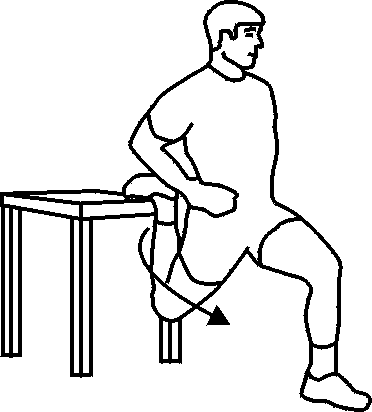
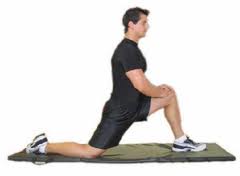


Chest Stretch


Sunday, August 15, 2010
Smoothies.
Many of you have had my emails on this, and as always there are naysayers, of course, from those who haven't tried them (everyone who has has of course has liked them). There are many reasons for the smoothies, for you as the client, to get fruit and vegetables a couple of times a day more than you're getting, more protein, more food into your system to stimulate your metabolism (hence increase fat loss). All you need is a blender, 2 shakers and a few ingredients and you have a meal replacement (handy for when you're at your desk) during work and a post workout shake, full of vitamins, minerals and protein!

Here is an ingredient list for your smoothies. . .
1: Mixed berries, about a handful
apple x1
cinnamon powder
banana x1
nuts (walnuts, cashews, peanuts, but unsalted and raw), little less than a handful
cherry flavoured low fat, low carb yoghurt, about quarter of a 1kg tub
low fat cottage cheese, about half a tub
broccoli, couple of stems
cherry tomatoes, about a handful
water
 This should top your blender up, you can substitute fruit for others you like, just try to make the flavours complimentary. When you're making them, chuck some skim milk powder in the one you plan to use for your post workout shake, this will give it some more carbs and protein to help replenish depleted muscles after a workout, this will speed up recovery, stimulate metabolism and help you drop some fat. Do I need to do an article on the benefits of post workout shakes? Because we're talking make or break with these things, if you're not having a high protein/ carb meal after your weight training workout, stop training right now!
Now these are obviously the best options for people who work hard and then go straight to training, easy to carry, easy to store and they give the body all it needs. Honestly, this is a no brainer, find what works for you, but make this happen, when I hear clients not eating right, I roll my eyes because there is NO excuse. I don't care how much you work, how tired you are, what activities you have on, if you can't spend 10 minutes at night in front of a blender, then you have bigger issues.
If you're having 6 meals a day and you make 2 of these, that's 2 meals covered right there, quick to prepare and it gives you so much. Some of you have commented on the taste? That you don't like specific ingredients? Fine, find what works for you, don't like dairy? Replace it with a protein supplement, the point is not any one of the ingredients are essential but the sum of the parts make it worth it. I get my protein from a site called www.myopure.com.au in my experience they sell the cheapest Whey Protein Isolate (WPI), pick up a couple of kgs an you have NO excuse not to be getting all your protein and nutrient values!
If you're doing the aforementioned smoothies already, and you have an aversion to eating vegetables as I do, you might like to consider a vegetable smoothy, for most of you drinking one of these will not be a problem as vegetables don't make you gag (as they do me). I put in mine, though you don't have to put in yours:
 x1 carrot
1/2 cup corn
1/2 cup peas
1/3 cucumber
handful of alfalfa
couple of stems of broccoli
cherry tomatoes
handful of spinach
handful of beans

You end up with the above. They taste like grass, but they're likely to be more vegetables than you could or would consume in a day, as long as you vary the ingredients you will get a raft of benefits.
Seriously guys, there's a reason I've been harping on about this for so long . If I could get you eating 2 of these a day and not touch the rest of your diet, that would still represent a huge step in the right direction!

Here is an ingredient list for your smoothies. . .
1: Mixed berries, about a handful
apple x1
cinnamon powder
banana x1
nuts (walnuts, cashews, peanuts, but unsalted and raw), little less than a handful
cherry flavoured low fat, low carb yoghurt, about quarter of a 1kg tub
low fat cottage cheese, about half a tub
broccoli, couple of stems
cherry tomatoes, about a handful
water

Now these are obviously the best options for people who work hard and then go straight to training, easy to carry, easy to store and they give the body all it needs. Honestly, this is a no brainer, find what works for you, but make this happen, when I hear clients not eating right, I roll my eyes because there is NO excuse. I don't care how much you work, how tired you are, what activities you have on, if you can't spend 10 minutes at night in front of a blender, then you have bigger issues.
If you're having 6 meals a day and you make 2 of these, that's 2 meals covered right there, quick to prepare and it gives you so much. Some of you have commented on the taste? That you don't like specific ingredients? Fine, find what works for you, don't like dairy? Replace it with a protein supplement, the point is not any one of the ingredients are essential but the sum of the parts make it worth it. I get my protein from a site called www.myopure.com.au in my experience they sell the cheapest Whey Protein Isolate (WPI), pick up a couple of kgs an you have NO excuse not to be getting all your protein and nutrient values!
If you're doing the aforementioned smoothies already, and you have an aversion to eating vegetables as I do, you might like to consider a vegetable smoothy, for most of you drinking one of these will not be a problem as vegetables don't make you gag (as they do me). I put in mine, though you don't have to put in yours:

1/2 cup corn
1/2 cup peas
1/3 cucumber
handful of alfalfa
couple of stems of broccoli
cherry tomatoes
handful of spinach
handful of beans

You end up with the above. They taste like grass, but they're likely to be more vegetables than you could or would consume in a day, as long as you vary the ingredients you will get a raft of benefits.
Seriously guys, there's a reason I've been harping on about this for so long . If I could get you eating 2 of these a day and not touch the rest of your diet, that would still represent a huge step in the right direction!
Thursday, August 12, 2010
Rant!
Putting it all together, diet and training need to be done in conjunction, I get a lot of smart assed comments with these blogs, a lot of disbelief, and that's the point of this blog, a response. People pick exercise by choice, by comfort, we are creatures of habit, people don't like being told how to act, an they especially don't like being told that what they like to do, is not good for them, I respond to that here. With that in mind, allow me to take a harder approach to the situation, for those who might respond to it. My interest, as your trainer, not as your friend, or even as a person, is in your well being not, your pride or feelings. You need to take these programs seriously for them to work, your diet needs to be keyed in, dialled up. I'm talking no wine, no fast food, no chocolate (ladies!) and training almost everyday. The fact that some of my clients get results from 3 days a week training is a friggin miracle to me, I do 6 day programs and barely get the results I want.
You don't need to do this forever, set aside 3 months, follow a 12 week programs and see where you are after that. Give it an all out effort, see where it takes you, none of us are spring chickens anymore, this fat loss stuff will give you longer life too, it's not just about being pretty.
Some of you have said to me how you shouldn't follow diets, that it's a lifestyle change. I think that can be fine, if you're going to stick to it, if you're getting results from it, but some people need a harder line, a harder stance. Some need specific strategies to lose fat, just trying to be conscious of what you eat is not enough for many people to get it done. It's a start, don't get me wrong, and in most cases with you guys, I'd just be happy if you ate breakfast once in a while and ate some protein with every meal.
The 3 things I'm talking about that get results; metabolic resistance training, HIIT and high protein/low carb diets are all you need to be doing, the programs I write for you, the diets I give, are the most time efficient, practical programs you're likely to get (while building functional strength and protecting you against injury). I don't want you to have to spend 1 second in the gym or kitchen longer than you have to. You're already paying good money for personal training, why not go that little bit further and do the diet too? I understand the mentality, I refer to personal training to being like that of a mechanic, you throw some money at the problem (come in once a week, sweat your guts out) an that's it? Sorry, that's nowhere near enough. I'm a guide, a motivator, and one that has to be on your case 24/7 for you to get results. I see some of you for 30 mins out of a 168hr week, think about that, 30mins to undo 167.5hours of eating, sitting, stress, poor sleep, alcohol and junk food? Really? Pretty sure that has to be the definition of insanity.
Now I can't make you guys do x5 1hr sessions a week with me (I would if I could!) so some of the responsibility for your training and results have to come from you. I used to take a lot of the poor results from clients personally, like I was a bad trainer, and I very well could be. But, I've seen what works practically, I've got the science to back me. You need to ask yourself, and clearly define what your goals are, be specific! If you wanna lose 10kgs, give yourself a time frame, make a choice to do it an set about it, because if you don't? If you choose to just "try and live a healthy lifestyle" you won't, because you have no driving force behind not eating KFC or drinking that beer.
I know I'm a big loud mouth, sassing you guys left and right, and at the end of the day, you are all training which is a positive step and I don't just think it's purely laziness that makes you not want to change (those of you who need to). A lot of you guys are pulling 60+ hour weeks, stresses of marriages, kids etc, it's hard. But that makes it more important, that you look after yourselves. I can't tell you how many of you are on blood pressure meds etc, my goal is to get you guys off that stuff. A little bit of preparation in your off time, and you guys can eat at work. Smoothies, pre made meals, this stuff is quick and you can keep it at work . Your health is more important than how much money you have in the bank or what car you drive. It sounds dramatic, but do you think on your death bed you're gonna wish you put in more hours at the office? Or that you ate right and looked after yourself (after all most cancers, diseases etc are avoidable or the likelihood reducible). Something to think about maybe?
Wednesday, August 11, 2010
Diet.
Now when I said metabolic resistance work was the big kahuna, well I wasn't lying, it is, in regards to training. But where the real results come from? Well that's in the kitchen, I'm going to put this as simply as possible:
YOU
CAN
NOT
OUT
TRAIN
A
BAD
DIET!!!!
I don't care who you are and how much you train, forget it. And let me be clear just what a bad diet includes, if you're just eating all unprocessed, fresh foods, freshly brought from the supermarket, prepared and then eaten, you're diet is still bad (largely due to the horrible way with which our fresh food is harvested, grown etc)! Not too long ago the fat profiles of beef and eggs looked more like that of fish than they do now! The pens and cages, food fed to the beef, the stress with which animals are kept all increase the acidity in their blood changing their macronutrient (protein/carb/fat) profiles. Then you have the quality if the soil, reusing of the soil, decreased nutrient output, means decreased quality of food, add chemicals, pollutants etc, "healthy" food isn't so great for you anymore. So if you're going to dinners, eating processed foods, eating junk food (ANYthing, chips, fast food, chocolate, sweets etc) not having 4-6 servings of vegetables a day (not pieces of) and about 2 servings of fruit (not pieces) then you're eating crap, if you're not drinking a couple (2) litres of water today, you're dehydrated. And I'm not even talking fat loss goals now, I'm talking health, longevity of life. Diet is THAT important and that overlooked. Everyone knows how they should be eating. I say this as if they were absolutes, I don't necesarily subscribe to that mentality, I'm simply using hyperbole to make a point.
Ok, let's discuss what you can do to get you're diet looking a little cleaner and more conducive to fat loss goals.
Macronutrient manipulation.
Wikipedia states that macronutrients are:
When considering a fat loss program you need to consider what will make the strongest losses in bodyfat, while maintaining lean mass. A reduction in total calories was thought to be the preferred method, but nowadays sports professionals are leaning toward a manipulation of specific macronutrients to produced fat loss (still working from a caloric deficit). This is due to the understanding of macronutrients role in the body, previously it was essentially assumed calories in (energy) vs calories out (energy expenditure), but now we're releasing that protein has many fat loss benefits, whereas carbohydrates hinder, and fat actually facilitates fat loss too (only when carbs are low). The evidence suggests that a reduction in carb intake (only allowing fruit, vegetables, with the exception of oats for breakfast) and an increase in lean protein sources (with a moderate increase in healthy fats) leads to the best environment conducive to fat loss. How does this work? The body has 3 storage capacities for energy 1- Carbohydrate: Glycogen, 2-Protein: Lean muscle, 2- Fat. The reason for reducing carbs is to keep the bodies glycogen levels low, so it can't draw its energy from there, but we also want to create and maintain muscle mass, by keeping it anabolic (in a state of protein synthesis). So, a reduced carbohydrate and a solid weight training program under conditions of a caloric deficit will shift the body towards preferentially burning fat stores (it is possible to do this with higher carb intakes, but requires much more strict attention to detail, beyond which your average person will achieve). By increasing you r protein intake and by increasing your meal frequency (up to 5-6 times per day) you increase what's known as TEF (Thermic Effect of Food), what this simply means is the amount of energy your body uses to chew, digest and excrete food. Protein foods have a TEF of 25-30%, wheat and grain carbs about 5-9%, fruits around 15% and vegetables 30% and fats about 0-3%. If you exchanged 100grams of carbs for 100grams of protein you would burn an extra 20-25 calories without doing anything but switching bread for chicken (works about to be about 100 or so extra calories burnt without any extra work just by adding lean protein sources and removing grains, cereals and wheat's). You couple that with the metabolism raising exercise you're doing, with drinking ice water all day (about another 20 calories a day just there) and you're burning calories all day, with not a lot of work!
Nutrient Timing
You want to save starchy carb foods for breakfast or for post workout, this is because your glycogen levels are low. Your body handles carbs well in the morning, and it creates a beneficial hormonal environment for the rest of the day. There are certain times of the day when your body utilises carbs for fuel and there are others when it is more likely to store them as fat. In the morning, as with during and after exercise are the best times for your body to use carbs efficiently. You don't need to become an expert at counting calories or even having extravagant food choices, just make sure you have access to the foods listed below and you can start to shred those kgs quickly. It is very important you consume 5-6 small high protein meals throughout the day, it's about stimulating your metabolism. If you don't eat, you need to get into the mindset that, that is the same as eating junk, in fact it is probably preferable to eat junk over nothing. When you don't eat your body doesn't know when it's going to get its next meal so it actually stores fat in attempt to save your life, great for your body, bad for you! When you eat small meals constantly your body has to up your metabolism to burn through it, thus reducing fat, if you couple this with high protein meals that raise your metabolism as well (think of your metabolism as a fire, you want to stoke the fire, to burn fat) you're well on you rway to burning that extra weight off.
List of appropriate protein sources
A word on water, you want to drink ice cold water and about up to 3L of it a day. Always have a bottle in the fridge, chilled and ready to go.
Reference
Wikipedia. Retrieved 21/04/2011. http://en.wikipedia.org/wiki/Macronutrient
Studies (on the effect of training on top of dieting)
Horton E.S., (1986). Metabolic aspects of exercise and weight reduction. Medicine and Science in Sport and Exercise. 18(1):10-8.
Poehlman E.T., Melby C.L., Goran M.I., (1991). The impact of exercise and diet restriction on daily energy expenditure.Sport Medicine. 11(2):78-101.
Stiegler P., Cunliffe A., (2006). The role of diet and exercise for the maintenance of fat-free mass and resting metabolic rate during weight loss. Sport Medicine. 36(3):239-62.
Tremblay A., Després J.P., Bouchard C., (1985). The effects of exercise-training on energy balance and adipose tissue morphology and metabolism. Sport Medicine. 2(3):223-33.
YOU
CAN
NOT
OUT
TRAIN
A
BAD
DIET!!!!
I don't care who you are and how much you train, forget it. And let me be clear just what a bad diet includes, if you're just eating all unprocessed, fresh foods, freshly brought from the supermarket, prepared and then eaten, you're diet is still bad (largely due to the horrible way with which our fresh food is harvested, grown etc)! Not too long ago the fat profiles of beef and eggs looked more like that of fish than they do now! The pens and cages, food fed to the beef, the stress with which animals are kept all increase the acidity in their blood changing their macronutrient (protein/carb/fat) profiles. Then you have the quality if the soil, reusing of the soil, decreased nutrient output, means decreased quality of food, add chemicals, pollutants etc, "healthy" food isn't so great for you anymore. So if you're going to dinners, eating processed foods, eating junk food (ANYthing, chips, fast food, chocolate, sweets etc) not having 4-6 servings of vegetables a day (not pieces of) and about 2 servings of fruit (not pieces) then you're eating crap, if you're not drinking a couple (2) litres of water today, you're dehydrated. And I'm not even talking fat loss goals now, I'm talking health, longevity of life. Diet is THAT important and that overlooked. Everyone knows how they should be eating. I say this as if they were absolutes, I don't necesarily subscribe to that mentality, I'm simply using hyperbole to make a point.
Ok, let's discuss what you can do to get you're diet looking a little cleaner and more conducive to fat loss goals.
Macronutrient manipulation.
Wikipedia states that macronutrients are:
"Nutrients the body uses in relatively large amounts- proteins, carbohydrates and fats. This is opposed to micronutrients, which the body requires in smaller amount's such as vitamins and minerals. Macronutrient provide calories to the body as well as performing other functions."Most people are working on the basic assumption that fat is bad and all else is just noise. Unfortunately it is much more complicated than this, with most answers being counter intuitive to what you might suspect. Firstly, without getting too technical there are different types of protein, carbohydrates and fat, all three have a "bad" type, a "moderately good" type and a "good" type. For example when talking about carbohydrates, simple sugars such as refined sugar are considered bad (as in never consume), and for the purpose of a fat loss diet, starchy carbs such as grains and cereals are best avoided and vegetables/fruit are where you'll be getting your carbs from. The same goes for fat, saturated fat, like that you would find in processed foods is considered generally bad (mainly because the body produces it already) whereas polyunsaturated fats, namely those found in foods such as avocado, flaxseed and fish are considered good.
When considering a fat loss program you need to consider what will make the strongest losses in bodyfat, while maintaining lean mass. A reduction in total calories was thought to be the preferred method, but nowadays sports professionals are leaning toward a manipulation of specific macronutrients to produced fat loss (still working from a caloric deficit). This is due to the understanding of macronutrients role in the body, previously it was essentially assumed calories in (energy) vs calories out (energy expenditure), but now we're releasing that protein has many fat loss benefits, whereas carbohydrates hinder, and fat actually facilitates fat loss too (only when carbs are low). The evidence suggests that a reduction in carb intake (only allowing fruit, vegetables, with the exception of oats for breakfast) and an increase in lean protein sources (with a moderate increase in healthy fats) leads to the best environment conducive to fat loss. How does this work? The body has 3 storage capacities for energy 1- Carbohydrate: Glycogen, 2-Protein: Lean muscle, 2- Fat. The reason for reducing carbs is to keep the bodies glycogen levels low, so it can't draw its energy from there, but we also want to create and maintain muscle mass, by keeping it anabolic (in a state of protein synthesis). So, a reduced carbohydrate and a solid weight training program under conditions of a caloric deficit will shift the body towards preferentially burning fat stores (it is possible to do this with higher carb intakes, but requires much more strict attention to detail, beyond which your average person will achieve). By increasing you r protein intake and by increasing your meal frequency (up to 5-6 times per day) you increase what's known as TEF (Thermic Effect of Food), what this simply means is the amount of energy your body uses to chew, digest and excrete food. Protein foods have a TEF of 25-30%, wheat and grain carbs about 5-9%, fruits around 15% and vegetables 30% and fats about 0-3%. If you exchanged 100grams of carbs for 100grams of protein you would burn an extra 20-25 calories without doing anything but switching bread for chicken (works about to be about 100 or so extra calories burnt without any extra work just by adding lean protein sources and removing grains, cereals and wheat's). You couple that with the metabolism raising exercise you're doing, with drinking ice water all day (about another 20 calories a day just there) and you're burning calories all day, with not a lot of work!
Nutrient Timing
You want to save starchy carb foods for breakfast or for post workout, this is because your glycogen levels are low. Your body handles carbs well in the morning, and it creates a beneficial hormonal environment for the rest of the day. There are certain times of the day when your body utilises carbs for fuel and there are others when it is more likely to store them as fat. In the morning, as with during and after exercise are the best times for your body to use carbs efficiently. You don't need to become an expert at counting calories or even having extravagant food choices, just make sure you have access to the foods listed below and you can start to shred those kgs quickly. It is very important you consume 5-6 small high protein meals throughout the day, it's about stimulating your metabolism. If you don't eat, you need to get into the mindset that, that is the same as eating junk, in fact it is probably preferable to eat junk over nothing. When you don't eat your body doesn't know when it's going to get its next meal so it actually stores fat in attempt to save your life, great for your body, bad for you! When you eat small meals constantly your body has to up your metabolism to burn through it, thus reducing fat, if you couple this with high protein meals that raise your metabolism as well (think of your metabolism as a fire, you want to stoke the fire, to burn fat) you're well on you rway to burning that extra weight off.
List of appropriate protein sources
Chicken breasts, chicken sausage, protein powder/shakes, egg whites, fish/seafood, beef (lean cuts, and always removing excess fat), turkey breast, low fat cottage cheese
List of appropriate fruits/vegetables
Asparagus, beans, broccoli, brussel spouts, chick peas, cucumbers, capsicum, salsa, spinach, lettuce, onions, mushrooms, tomatoes, squash, zucchini, blueberries, cantaloupe, grapefruit, kiwi, orange, nectarine, peach, pear, plum, strawberries and watermelon.
List of appropriate breakfast/post workout options:
Oatmeal, sweet potato, bread (whole grain), couscous, rice (brown), whole wheat pasta and tortilla corn).List of appropriate breakfast/post workout options:
A word on water, you want to drink ice cold water and about up to 3L of it a day. Always have a bottle in the fridge, chilled and ready to go.
Reference
Wikipedia. Retrieved 21/04/2011. http://en.wikipedia.org/wiki/Macronutrient
Studies (on the effect of training on top of dieting)
Horton E.S., (1986). Metabolic aspects of exercise and weight reduction. Medicine and Science in Sport and Exercise. 18(1):10-8.
Poehlman E.T., Melby C.L., Goran M.I., (1991). The impact of exercise and diet restriction on daily energy expenditure.Sport Medicine. 11(2):78-101.
Stiegler P., Cunliffe A., (2006). The role of diet and exercise for the maintenance of fat-free mass and resting metabolic rate during weight loss. Sport Medicine. 36(3):239-62.
Tremblay A., Després J.P., Bouchard C., (1985). The effects of exercise-training on energy balance and adipose tissue morphology and metabolism. Sport Medicine. 2(3):223-33.
Monday, August 9, 2010
About Me.
Ok maybe I need to qualify, below is a pick of me, at age 22, months before I started training. I had what you could essentially call an eating disorder. Not necessarily anorexia, but I mean look at me, I'm a 22 year old man and I look like a 16 year old girl! I had no idea about nutrition, timing, protein, carbs, weight training etc I ate what I want when I wanted it. I was 185cms at about 68kgs!
 Now from this image above, I went from this to below, in 2 years! From 68kgs to 105kgs! I ate what I was supposed to, I ate regularly and I did it without drugs in case you were wondering! I was strong (benching 130kgs, deadlifting 180kgs and squatting 180kgs, for reps too). I wanted to look like a comic book superhero, deluded I may have been, but I did it!
 Now in the span of 3 months, I went from 105kgs down to 90kgs (as I was dieting to get into shape).
 This was me after 3 months of dieting 20kgs lighter, by this time it had been 2 and a half years since that first image. Now after this I spent the next 2 years getting as big (and as fat it seems) as I could. I wasn't happy with my size yet, and I wanted more, so I asked my then girlfriend if she minded if I got fat, she didn't. I blasted the calories and weight and got up to 120kgs. I was benching 160kgs, deadlifting 205kgs (for reps) and squatting 220kgs.


 Now this was 4 years after I was a 68kgs rake, now I was up to about 117kgs, and that's when I decided to start to get lean again, I spent the next 6 months leaning up and in that time lost about 30kgs, getting down to about 90kgs again (a weight my body seems to like).
 I then spent the next year tryin out different styles of training. But when I got back from America at the start of this year I decided to go for abs, didn't care how big I was, all I wanted was abs. I was about 100kgs when I got back, pretty chubby and generally just not very healthy, I spent 6 months following 2 12 week programs, lost only 10kgs but looked the best I ever have! Below is me at 90kgs flat and like 14% bodyfat, the lowest I've ever been!


The best I've ever looked has come from doing intervals, metabolic resistance work and eating a low carb, high protein diet. I trained 6 days a week, absolutely as hard as I could and looked the best I ever have! I wanted to put this diary up to show you, that I started out as nothing, got huge and now am "skinny" (as some of my clients have been kind enough to point out). I did this latest diet with half the training volume of last time. Before I followed bodybuilder style routines. Bodypart splits, steady state cardio (I'm talking several hours over several training sessions a day), to get the results that I got from x1 1hr training sessions a day. . I'm the proof of this stuff, and part of the reason I espouse it. . .


The best I've ever looked has come from doing intervals, metabolic resistance work and eating a low carb, high protein diet. I trained 6 days a week, absolutely as hard as I could and looked the best I ever have! I wanted to put this diary up to show you, that I started out as nothing, got huge and now am "skinny" (as some of my clients have been kind enough to point out). I did this latest diet with half the training volume of last time. Before I followed bodybuilder style routines. Bodypart splits, steady state cardio (I'm talking several hours over several training sessions a day), to get the results that I got from x1 1hr training sessions a day. . I'm the proof of this stuff, and part of the reason I espouse it. . .
High Intensity Interval Training.
Predominantly a high intensity interval training (HIIT) session is a type of "cardio" session (though I don't like that term as it implies what you see most people doing on cardio equipment; lazily strolling on a treadmill, while holding onto the rails or sitting on a bike reading a book). It is an intense, time effective, weight loss strategy to increase your energy system development, strip fat and do all this in half the time it would take to do conventional cardio. Now, having said that, why why would you want to do HIIT over traditional steady state cardio (long slow continuous- running, jogging, walking etc)? There are many reasons, firstly, it burns more calories (increases fat loss) per capita of work, which means you work for less time to burn more calories, that alone should make it everyones favourite, and preferred form of exercise, period (why would you want to spend all your time in a gym exercising? Why should exercise become a second job?)! The reason intervals are so effective (or at least one of the main mechanisms we are aware of at the moment) is a raise in what is called, EPOC (Excess Post exercise Oxygen Consumption). Now current research by exercise physiologists states that EPOC is not the only factor cause the raising of the metabolism from HIIT, the mechanics by which fat loss occurs over a 24-48hr period after doing them is not quite understood as yet, (it could be due to catecholmine release which increases the effectiveness of fat reducing enzymes) it is only documented as happening. The information regarding HIIT comes from the results accumulated by the worlds leading strength and conditioning coaches as well as being documented by studies.
 Which one would you rather look like? I hear stories all the time from women who say something like "I know plenty of women who run who are sticks" Pay attention to the language used: "sticks", no muscle mass, bodyfat percentages would therefore be high which means they are at risk for cardiovascular disease, as would any other overweight person, the fact that they're skinny? There is a name for that: "skinny fat". Look at the above image, yes it is taken to the extreme, but that's what a lot of distance running does to you, he's skinny alright, but he looks like crap! Similarly I've had some ladies get bent out of shape "if running and walking is so bad, maybe I shouldn't do them at all", lets say you burn 200 calories in an hour walk, you might just be better off not eating pasta with dinner. Having said all this though, movement is movement, you're gonna burn calories no matter what you do, by that principle you're gonna burn calories chewing gum, or hitting yourself with a hammer, I wouldn't, however, recommend either as a fat loss strategy, neither would I recommend distance running/walking!
HIIT actually increases your VO2 Max (basically how fit you are), reduces fat mass, increases vitality (vitality in this case being all positive health benefits (stroke volume, stroke frequency etc) more than steady state cardio, in less time. In fact Michael Boyle, in his HIIT DVD presented evidence that intervals actually retard and reverse the aging process of cells, if that isn't incentive enough to do them I don't know what is. Conversely steady state cardio has been shown to reduce muscle mass (due to increased cortisol production and depleted glycogen) making it harder to burn fat, it causes wear and tear on your joints and you have to do hours and hours of it for it to have a beneficial effect.
So why aren't people the world over doing HIIT over steady state? It's hard, pure and simple! The nature of HIIT is an all out brutal effort, there's no reading a book or watching TV. You need to get into your head that exercise is meant to be difficult, uncomfortable, if you're not asking yourself "why am I doing this?" Then you're not training hard enough! I would also say it's education, the aerobic craze from 20 years ago is still being felt today, it's going to take time to change the cultural paradigm. How do we do that you might ask? By promoting the current science, the current evidence.
Time constraints are an issue or everyone, why would you want an exercise program that consists of several 45min-1hr long running sessions (on top of your work and resistance training), when there is a faster and more effective way? We all have jobs we don't want to make exercise another one! Something to think about maybe?
If you're looking for references I refer you to this blog.
Saturday, August 7, 2010
Metabolic Resistance Training (MRT).
Just about, no scratch that, every client I have is on some form of this, but what is it?
MRT is actually the best way to lose weight and should be the main focus of any fat loss program, if you think of your muscular system as machinery and fat as dead weight, we know muscle weighs more than fat, but it also burns more calories than fat. When designing programs we want to use this powerful machinery to its fullest potential; traditional strength, power and hypertrophy programs are insufficient stimulus to create enough of a disturbance in your metabolism to really illicit the greatest response. Instead we want to focus on making that machinery work and in turn recover. The great thing about MRT for beginners is due to your inexperience with weightlifting you will increase your muscle mass (if you compliment this training with a high protein/low carbohydrate diet), even experienced lifters can increase muscle mass, mostly due to the intensity of these programs. The aforementioned training styles (strength, power, and hypertrophy) rely heavily on rest periods and very heavy weight whereas metabolic resistance work focuses on moderate weight, many sets (without rest) and decreased rest intervals. If you increase that hard working machinery you will shift your body toward preferential fat oxidization (via EPOC/”afterburn”).
Beginners come into the gym with poorly developed neural pathways and an inability to activate to the full extent they are capable, their muscles. They need time with less intense (in terms of volume) forms of weight training to help develop neurally, this gives them plenty of time to work off any extra body fat, before they start to build large amounts of muscle (bodybuilder programs, due to their overloading nature, confuse neural pathways by training the body in an opposing way to which it moves naturally). The great thing about being a beginner is that due to your inexperience with weightlifting, you will still increase muscle mass, it's generally within the first year of weight training that you gain the most mass.
Even experienced lifters can gain from these programs too, due to their intensity, most traditional (strength, power, hypertrophy) programs are nowhere near intense enough and a large component to gaining muscle mass is intensity.
MRT can also be corrective in nature where traditional programs generally aren't, by using an appropriate amount of weight and bodyweight the lifter gets strong enough to manipulate their own body through space which is essential as a foundation. Usually unilateral (one side at a time) exercises are used to create greater workload and energy demand which brings into play things like single leg training which is important for restoring and promoting glute health, knee stability and proper hip complex function. It can be used in conjunction with anaerobic programs (such as high intensity interval training) to help correct imbalances, further reduce fat storage on the body and stimulate muscle growth (which = increased metabolism which = decrease in fat loss, improved vitality etc).
When restricting calories, working harder and recovering all the time means your body has a tendency to go into what’s known as a catabolic state which roughly means your body is looking for energy to maintain its basal metabolic rate (base energy level to perform all functions of the body: breathing, heart rate etc). What you need to remember about your powerful machinery is that it is an abundant source of stored energy. Your body wants to use this energy because it can access it easily, if you put your body into a state of catabolism. You can do this through not following your diet (not eating high protein meals frequently), spending hours on the treadmill doing steady state cardio or by skipping your MRT. This lack of caloric intake coupled with excessive cardio and no weight training will cause your body to use less energy, which will cause it to reduce your metabolic rate which will cause your fat loss goals to stall, perhaps even reverse.
Muscle is the key component in almost all things regrading health; metabolism is increased through greater muscle mass which causes all sorts of benefits such as increased fat loss, protective effects on the body's systems and mineral storage. It creates greater surface area which helps with metabolism, hormone function (regulation thereof). As muscle is essentially protein, and many of the body's processes (hormones, enzymes etc) run via protein receptors and proteins throughout the body, it increases their effectiveness.
At the end of the day it isn’t just about metabolic work, combine this with high intensity interval training and a high protein/low carbohydrate (moderate healthy fats) diet and losing bodyfat becomes actually quite easy. Quality of life/self esteem improves, movement, postural, physiological and mental faculties will all be increased, in a very short amount of time.
Examples of MRT
Superset pairings (agonist/antagonist, i.e. - chest/back).
Alternating set (upper body/lower body, i.e. - back/legs).
Circuits (horizontal push/horizontal pull/ vertical push/vertical pull/quad dominant/ hip dominant/core, i.e.- chest/row/shoulder press/ chin-up/ squat/ leg curl/ plank).
Escalating Density Training- (superset pairings agonist/antagonist, usually, for time i.e. - Push up/Inverted Row).
Campbell W.W., Haub M.D., Wolfe R.R., Ferrando A.A., Sullivan D.H., Apolzan J.W., Iglay H.B., (2009). Resistance training preserves fat-free mass without impacting changes in protein metabolism after weight loss in older women. Obesity (Silver Spring).17(7):1332-9.
Demling R.H., DeSanti L., (2000). Effect of a hypocaloric diet, increased protein intake and resistance training on lean mass gains and fat mass loss in overweight police officers. Annals of Nutrition and Metabolism. 44(1):21-9.
Hunter G.R., Byrne N.M., Sirikul B., Fernández J.R., Zuckerman P.A., Darnell B.E., Gower B.A., (2008). Resistance training conserves fat-free mass and resting energy expenditure following weight loss. Obesity (Silver Spring). (5):1045-51.
Idoate F., Ibañez J., Gorostiaga E.M., García-Unciti M., Martínez-Labari C., Izquierdo M., (2010). Weight-loss diet alone or combined with resistance training induces different regional visceral fat changes in obese women. Internationl Journal of Obesity.
Pighon A., Paquette A., Barsalani R., Chapados N.A., Rabasa-Lhoret R., Yasari S., Prud'homme D., Lavoie J.M., (2009). Resistance training attenuates fat mass regain after weight loss in ovariectomized rats. Maturitas. 64(1):52-7.
Subscribe to:
Posts (Atom)