Showing posts with label Recovery. Show all posts

Friday, August 5, 2011

Dealing With Anterior Tilt.

Look at the forward tilt of my pelvis, how my glutes sit high.
As many of you who read this blog may have noted I have been complaining of low back pain for the last few months (here, here, here), I've tried different strategies; changing training times, general foam rolling and stretching for the lower body complex, with little relief. Some of you may be asking "why not just see a physio?" and that would be a wise and just question, the answer? Nothing profound, I'm a guy, we fear doctors.

It wasn't until I put this photo up on this blog the other day that I got a really good demonstration of what the possible problem could be, as you can see my pelvis is tilted, quite dramatically in an anterior (frontal) position, so I figured I would research a hunch I had, that it could be what is known as anterior pelvic tilt (a tilting of the pelvis that causes contraindication). I asked what were my symptoms? Tight hamstrings, sore low back, weak abs. Due to this, I worked on my posterior chain relentlessly, figuring that was where the problem was (this is the pain site vs pain source problem), well upon research these problems are consistent with an anteriorly tilted pelvis, and what are the recommendations? Stay away from stretching posterior  (hip extensor) muscles such as the glutes and hamstrings, as they only appear tight, but are actually at adequate or above adequate length.

Kendall et al in their hernia inducing book Muscles: Testing and Function with Posture and Pain define the Kyphoic-lordotic (defined roughly as: "characterized by a convex curvature of the thoracic spine and an inwardly curved lower back resulting from the pelvis being tilted forward.") posture and possible causes:
"Four groups of muscle support the pelvis in anteroposterior alignment. The low back extensors pull upward on the pelvis posteriorly, the hamstrings pull downward posteriorly, the abdominal muscles pull upward anteriorly, and the hip flexors pull downward anteriorly. With good muscle balance the pelvis is maintained in good alignment. With muscle imbalance, the pelvis tilts anteriorly, the low back arches forward into a position of lordosis. In this position there is undue compression posteriorly on the vertebrae, and the articulating facets, and undue tension on the anterior longitudinal ligamnet in the lumbar area." (Kendall et al pg 223, 2005)
The result is roughly what I have above, the problem, as mentioned above, with what I was doing, was it didn't cater to my specific pathology. I was throwing everything at the problem, hoping something would stick, you don't need to tell me how silly that was. The small amount of relief I felt would have been due to the fact that I was foam rolling and stretching my hip flexors and low back. Kendall et all 2005 suggest that to reduce the anterior tilt of the pelvis there are several steps I need to follow:
  1. Strengthen the anterior abdominal muscles (Rectus Femoris, External Obliques)
  2. Strengthen hip extensor muscles (Glutes and Hamstrings)
  3. Stretch tight low back and hip flexor muscles (Spinal Erectors, Rectus Femoris, TFL, Psoas, Illiacus) (Kendall et al pg 223,  2005)
The authors go on to suggest that the weakness in the abdominal muscles allows the pelvis to tilt forward due to the fact that they are unable to upwardly pull on the pelvis to maintain it's correct alignment, this also causes the low back to go into lordosis (curvature), which causes pain across the low back.The tight hip flexors can cause reduced range of motion in hip extension (think the top part of a deadlift movement when you drive your hips forward), therefore contributing to weak hip extensor muscles.(Kendall et al pg 223-4-5, 2005)

How is this caused? Well there are many causes, one of which is sitting at a desk or in the sitting position for long periods of time, which I do, I spend a butt load of time at the computer (you couldn't tell with all the blogging).

So far I've been sticking to the HIIT (will attempt a light MRT session tomorrow night) and doing specific foam roll drills (with cricket balls into my TFL and glutes), and stretching of the aforementioned hip flexors.  After that, to strengthen my core and glutes I superset glute bridges (10 reps) with planks (30-45s).

Further reading
Hips Don't Lie: Fixing Your Force Couples

Reference
Kendall F.P., McCreary E.K., Provance P.G., Rodgers M.M., Romani W.A., (2005). Muscles: Testing and Function with Posture and Pain. Baltimore, MD. Lippencott Williams & Watkins. Pp- 223, 224, 225.

Sunday, May 22, 2011

Training Diary- German Volume Training- Wk 3.

Hmmm so what do I have to report this week? I'll start with training. I tripped up the stairs on the weekend and tweaked my back again, I'd say it's still a little finicky since last I hurt it. I've been bad too. I stopped, or rather slowed the rate of stretching due to my back feeling better again. This blog must read like amateur hour, even I scoff at that bulls**t. I've since had some really good stretching sessions and my back feels good again, I've obviously gotta pull my finger out and get serious with this stuff again.

Bodyfat wise I'm feeling like a big fatty, I'm too scared to take any pics, I'll get someone to do an assessment on me this week (Shmion that's you), see how bad it is. I haven't been eating junk or meat, although I did have Nandos on Saturday night just before Pirates: 4, if you like Rob Marshall you'll enjoy it, I thus far, have been unimpressed by his work, and this movie left me going: "can we get a director who knows what he's doing in here?" (I can see merit and points of agreement in both of these reviews). Say what you want about Verbinski, the guy knows how to direct a clean, witty, Hollywierd movie. Anyway, back on topic, it's the friggin carb content of the vegetarian meals that's getting me chunky, it's all carb based with a lower ratio of protein. The lentil/dahl/chick pea curries, smoothies, vegetarian sausages (with a piece of bread), spinach and ricotta ravioli (I try to have that around my workouts) have just been making me real soggy round the midsection. If this anyone with any tips on this? I might try an buy some vegetarian minces and make some sauce meals, cut out some of the bread. When you're putting on fat, and looking soggy all over when you're not even eating junk? You can get pretty frustrated, I might as well be eating crap, grr!

The program's going really well, don't feel fatigued, can see some shoulder, back and arm development (thanks to Robski for the comment), am getting stronger and lifting almost not completely embarrassing weight (for a beginner). Weight keeps fluctuating between about 96 and 100kg depending on which scale, time of the day etc.

Workout 9
Arms
x 10 sets Wk3
A1: DB Alt Curl  22.5kg
A2: CG Bench   90kg
B1: Preacher Curl  42.5kg,42.5kg,42.5kg
B2: Skullcrusher  42.5kg,42.5kg,42.5kg
Workout 10
Chest/Back
x10 sets Wk3
A1: BB Inc Bench 90kh
A2: Chinup Bodyweight + 20kgs
B1: DB Bench 35kg, 35kg, 35kg
B2: DB BO Row 30kg,30kg,30kg


Workout 11
Legs
x10 sets Wk3
A1: BB Front Squat 80kg
A2: Lying Leg Curl 65kg
B1: RFESS  20kg,20kg,20kg
B2: BB Good Morning 60kg,60kg,60kg
Workout 12
Arms
x 10 sets Wk3
A1: BB EZ Curl 47.5kg
A2: Dip Bodyweight + 15kg
B1: DB Hammer Curl 20kg,20kg,22,5kg
B2: Skullcrusher 47.5kg,47.5kg,47.5kg

As mentioned, on Thursday I made up some ravioli for after my legs session (I had a glass of some skim milk with protein added too), but I was so hungry Friday afternoon I ate the last of it, with no workout in site, I felt ever the fat man on Saturday. I guess I need to drop that, my wallet and burgeoning gut will be thankful.

Breakfast: 1 cup of oats with 1 scoop protein powder, Hilo milk, 1/2 teaspoon of sugar. 700mL of water. Vegetable smoothy- 1/3 of a cucumber, handful of alfalfa, a carrot, handfuls of beans, peas, corn, spinach, a few sticks of broccoli. 1 tablespoon of creatine in milk.

Post workout shake: x2  up n go "energize"'s, 30g of protein powder. 500-700mL of water during training. 1 tablespoon of creatine.

Post workout meal: X2 fried eggs on wholemeal toast (x2 slics) with low fat butter.
 
Meal before afternoon shift:  Smoothy- 1/2 cup of berries, 1 cup of mixed veggies, 1 banana, 1 pear/apple, 1/2 cup of walnuts/cashews, a touch of cinnamon, 750mL of water, 1 cup of yogurt, 150g cottage cheese, 3 broccoli stems, handful of cherry tomatoes, lentils, chick peas (or various other types of beans/lentils). I also forgot to note, this makes 2 shakes that I have over the course of the day, or I have the leftover one the next day.

Dinner: Various vegetarian options such as vegetable sausages, bacon etc.

Pre bed snack (sometimes): Second vegetable smoothy. 

Supplements. 3-4 fish oil tabs with my afternoon smoothy, and I've started taking a multivitamin supplement once-twice a day.

Sunday, April 17, 2011

Training Diary-Phase 3- Wk1.

Hey guys! Week one of this last phase, and what did I do on my first workout Monday morning? Crank my low back, so I've been foam rolling, stretching and doing my mobility before every workout, with a specific focus on my hips (loosening up hip flexors, glutes, hamstrings) and my quads, I also specifically worked on my t-spine which has been noticeably tight lately and has been giving me some pain in my upper back. I did some foam rolling (with a roller and 2 tennis balls sticky taped together), mobility and stretching for my upper body too. I haven't specifically done anything on my low back as I wanted to see if relief would come from stretching, foam rolling and mobilizing the surrounding structures (as per Boyles "joint by joint" approach), but might get into it with some foam rolling and light stretching this morning (Friday morning) before I train lower body.

Ok, well I didn't end up training Friday morning due to the sleeping pilll I took on Wednesday night (more below), plus with my back being sore, thought best to get some recovery. Chris gave me a low back stretch called the "pretzel" (picture below) on Friday morning which has given me a huge amount of relief in my low back (just a bit of tightness remains), which is great. What's the take home message? Don't wait til something goes before you do this stuff! It's better now, but still tender. I think it's in part due to my almost zero amount of recovery/regeneration/warm up, my lack of sleep, increased stress due to lack of sleep and the weight I've been moving (yes to those of you who are actually strong, please hold your chuckles!).

While not the same, this is close to the "pretzel" stretch Wedge showed me
So I've been sleeping better, somewhat, but have still been really run down, it appears to be overtraining, which could be from the program or it could be from the program plus my insomnia bout last week (circular reasoning?), I've been irritable, tired but can't sleep, rundown, suffering with flu like symptoms, classic overtraining symptoms.  So, I bit the bullet and took some sleeping pills Wednesday night and subsequently spent most of Thursday (and Sunday) asleep, which was nice, and needed! Now I know you can get them over the counter I'm going to partake on the days I'm free to lay around. Is that addressing the symptoms and not the cause? Possibly, but I need my rest and want to make sure I'm recovering properly before I jump to any great conclusions, even if it is the program I have 3 more weeks then I'm done, so I can tough it out til then, either way. I am, after all, still making gains in both strength and weight (another weight and bf% test may be in order soon, I think I'm sitting at about 98ish).

Rob Superset


Phase 3


Day 1


Upper BodySRWk1
DB Bench/ 3 Point Row38 32.5kg/32.5kg, 40kg/45kg, 40kg/45kg.
DB Dec/Wd Gp Std Rw38 35kg/90kg, 35kg/90kg, 40kg/90kg.
Pushpress/ Pullup38 50kg/BWx8, 60/BWx8, 60kg/BWx8.
Cble Pushdwn/ BB Curl38 65/40kg, 70/40kg-


Day 2


Lower Body/AbsSRWk1
BB Deadlift38 80kg, 120kg, 120kg.
BB Lng/BB Good Mrng38 60kg/60kg, 70kg/70kg, 70kg/70kg.
Leg Prss/Sgl Lg Vd Lg Crl38 200kg/1, 200kg/1, 220kg/1.
Rollout/Jacknife38 1,1,1.


Day 3


Upper BodySRWk1
BB Bench/Unsppt T-br Rw38 70kg/60kg, 90kg/70kg, 100kg/70kg.
DB Inc/ Machine Row38 32.5kg/12 (Plates), 37.5kg/14, 40kg/14.
Hang Clea/Press/ Wd Chin38  60kg/10kg, 60kg/12.5kg, 60kg/15kg.
Skullcrusher/ DB Curl38 -.


Day 4


Lower Body S R Wk1
Wide Back Squar 3 10  -
Lateral Lunge/SLDL 3 10 -
DB Step Up/Valsld Lg Crl 3 10 -
Bodysaw/ Hanging Leg Rs
10-

Diet wise, I've dropped the pies, a bit hard to claim to be a "semivegetarian" when you're consuming 4 meat meals a week, plus I was still having nachos on top of that, my waistline couldn't take it! I have only had one meat meal this week at Hans before we went and saw Scream 4 (it's awesome by the way! "Scream 4": More meta than ever! And almost as much fun"), so I'm feeling good about that. Still eating nachos, but as I'm training in the morning now they have become my post shake, post workout meal, not great I know, but if ever there was a part of the day when a meal like that would be less detrimental, it's after a weights workout (when your body is in recovery and can use excess calories for muscle glycogen, muscle repair etc). This is just a self justification, ad hoc mentality that I certainly don't encourage, and a la Jason Feruggia's "Keep it Real(istic)" post last week, the fatter I get now, means the smaller I'm gonna be when I diet down. Which effectively makes all this hard work useless. I am, after all, not a bodybuilder, I don't use drugs, that would allow me to bulk and cut, I'm just a recreational lifter, whose primary goal is looking good, and being big, a fine line to walk sure, but eating crap is not the way to get there. So, as with the removal of the meat pies, I just need to rationalise the removal of food I like that's subordinate to a goal I actually want to achieve (pleasure of eating nachos v having abs). I've been listening to a podcast on the psychology of "terror management" (scroll down to the podcast entitled "RD Extra: Denying Death") and it's made me realise how important psychology is to a trainer and how little I know about it, could be something for me to research.

I've also ordered some creatine (monohydrate) which I'll start when it gets here, as my goal was to start it when I hit 100kgs, which I almost am. I'll see if it adds any muscle and not just water, I'll also start a Beta-Alanine supplement when/if I get to 105kgs.

Breakfast: 1 cup of oats with 1 scoop protein powder, Hilo milk, 1/2 teaspoon of sugar. 700mL of water.

Post workout shake: x2  up n go "energize"'s, 30g of protein powder. 500-700mL of water during training.

Post workout meal: Nachos.
 
Meal before afternoon shift:  Smoothy- 1/2 cup of berries, 1 cup of mixed veggies, 1 banana, 1 pear/apple, 1/2 cup of walnuts/cashews, a touch of cinnamon, 750mL of water, 1 cup of yogurt, 150g cottage cheese, 3 broccoli stems, handful of cherry tomatoes, lentils, chick peas (or various other types of beans/lentils). I also forgot to note, this makes 2 shakes that I have over the course of the day, or I have the leftover one the next day.


Dinner: Various egg options, usually 2 eggs on wholemeal toast.

Supplements. 3-4 fish oil tabs with my afternoon smoothy, and I've started taking a multivitamin supplement once-twice a day.

Sunday, April 10, 2011

Training Diary-Phase 2- Wk4.

Well, about mid week I actually got sick (flu like symptoms, most likely CNS fatigue), because of this insomnia I've been suffering from, which hindered my ability to train, as I didn't want to exacerbate my condition by training too hard. With that in mind I took Friday morning off, and skipped the last couple of sets on Wednesday. Decided to focus on getting some rest and recovering, which as of writing this on Sunday morning I can say I am.

Perhaps due to feeling as crap as I did, my diet this week has been, not super great. 4 servings of pies (post workout meals), 1 beef ginger at Hans Cafe, and 2 serves of nachos, frozen coke and malteasers at the movie (Sucker Punch- highly recommended) on Saturday night. Feeling bad is not an excuse I know, I can only try to fix it up next week. I'm going to remove the pies, and attempt to keep the nachos to a minimum. Starting to get less than desirable in the health and waistline departments

Rob Superset


Phase 2


Day 1


Upper BodySRWk1
BB Inc Press/ DB BO Row310 70kg/35kg, 90kg/42.5kg, 100kg/45kg.
DB Bench/ Core Row310 35kg/22.5kg, 37.5kg/25kg, 40kg/25kg.
DB Std Prss/ CG Pullup310 30kg/BWx9, 30kg/BWx9, 32.5kg/BWx9.
Dip/ Preacher Crl310 BWx10/42.5kg, BWx 10/42.5kg, Skipped due to time
CG Pushup/ DB Hammer Crl310 Yes I continue to be weak.


Day 2


Lower Body/AbsSRWk1
Front Squat310 70kg, 80kg, 90kg.
DB Rvrs Lng/ PullThrough310 25kg/140kg, 32.5kg/160kg, 32.5kg/170kg.
Hack Squat/BB  Hip Ext310 80kg/70kg, 80kg/70kg, 80kg/70kg.
Pallof Press (each side)310 100kg, 100kg, 100kg.


Day 3


Upper BodySRWk1
DB Inc Bench/ BB BO Row310 32.5kg/70kg, 40kg/100kg, 40g/100kg.
Wghtd Pushup/ Invrtd Pullup *310 BW/BW, BW/BW, BW/BW*.
DB Std Arnold/ Mx Grip Pullup310 25kg/BWx8, 25kg/BWx8, 25kg/BWx6.
CG Bench/ DB Alt Curl310 Skipped due to feeling sick
DB O/H Ext/ BB Curl310

Day 4


Lower Body S R Wk1
BB Sumo Deadlift 3 10
RFESS/ Kttlbll Swg 3 10
Leg Press/ Sngl Leg Curl 3 10
Valslide Rllt/ Plank
10
*There was no-one in the gym to help me put plates on my back and chest.


Aside from being as rundown as I have been, my training itself isn't suffering too much, still going up in weights, feeling strong, and getting bigger. All of this is somewhat consoling considering how crap I've been feelinng.

Not too much to report this week, I've been feeling crap, but I'm sleeping more which is nice, and feeling better, looking forward to the new program next week. I'll post it now, as I really have little to say, but I may update it later, expect more detail next week.

Breakfast: 1 cup of oats with 1 scoop protein powder, Hilo milk, 1/2 teaspoon of sugar. 700mL of water.

Post workout shake: x2  up n go "energize"'s, 30g of protein powder. 500-700mL of water during training.

Post workout meal: x2 Mrs Mac's Pies, half a glass of Hilo milk.
 
Meal before afternoon shift:  Smoothy- 1/2 cup of berries, 1 cup of mixed veggies, 1 banana, 1 pear/apple, 1/2 cup of walnuts/cashews, a touch of cinnamon, 750mL of water, 1 cup of yogurt, 150g cottage cheese, 3 broccoli stems, handful of cherry tomatoes, lentils, chick peas (or various other types of beans/lentils). I also forgot to note, this makes 2 shakes that I have over the course of the day, or I have the leftover one the next day.


Dinner: Various egg options, I cooked up my chicken and made a korma curry with it.But as you see above, have only had 2 meals from it, other meals included eggs on toast, egg white omelette's with toast etc.

Supplements. 3-4 fish oil tabs with my afternoon smoothy, and I've started taking a multivitamin supplement once-twice a day.

Thursday, February 24, 2011

Probiotics.

I recently had to take some antibiotics. After my week or so dose I felt my stomach and general intestinal situation to be interrupted in terms of, well stuff we don't need to go into. But suffice it to say, my normally functioning body, was running haphazardly and uncomfortably.

Now being a know-it-all, I really just went into a thought process of "I'll just get back to eating normal and it'll fix itself", which, over time, it may have done. But I was in quite a large amount of discomfort. My hippie girlfriend suggested probiotics. Having done my sports science degree (minoring in nutrition), I had done some research into probiotics, but honestly? I was in such meathead mode at uni, that if it didn't get you big, I didn't care.

I started taking the probiotics, as it seems to follow that taking antibiotics for a streptococcus infection could reduce my gut bacteria too, some of which are streptococcus. I instantly felt better, more regular. Seems hippies still know their stuff eh?

It did inspire me to thought. I'm a reasonably healthy guy, with a reasonably healthy lifestyle, I eat a lot of yogurt, I eat a bit of fruit and vegetables, it was only when I had a chemically enhanced disturbance, did I feel out of whack. But, and here's the point (eventually), it got me to thinking about my clients, some of whom may have diets less strict, less focused on fruits, vegetables etc. I asked myself "could they benefit from a probiotic supplement?" Perhaps one cycle done bi-yearly? I'm going to do some research, and let's see what conclusions we can find, and let's see if they support my prior assumptions.

Firstly, lets define our terms, what exactly do we mean, when we say probiotics? Well, Charles Poliquin offers a definition on his blog from the World Health Organisation:
"Live microorganisms which when administered in adequate amounts confer a health benefit on the host." (Poliquin, retrieved 21/02/11)
Le's not get into textual analysis, as Poloquin does in this article (though I do recommend you read it, below), on whether this is a good definition, but rather work with what we have. Or better yet, lets look to Wahlqvist to see what he has to say:
"Probiotics are viable micro-organisms which are beneficial to health by improving the intestinal micriobial balance." (Wahlqvist 2002)
While this definition still contains come generic language, I, and Poloquin don't like, we do get a little more detail in it, let's turn to Bob Calvin, who has a great in-depth review of probiotics here:
"Our digestive tract is host to a plethora of living microorganisms some "friendly" and some "harmful." "Friendly" microorganisms aid in digestion, immune function, absorption of minerals, treat inflammation, and prevent the build-up of "harmful" microorganisms, while "harmful" microorganisms can lead to disease, infection and a suppressed immune function.
The widespread use of antibiotics is effective in killing "harmful" as well as "friendly" microorganisms (emphasis added). This poses a problem and can lead to decreases in immune function and translocation of harmful bacteria from the digestive tract into other organs such as the liver and lymph nodes." (Calvin 2006)
 Let's also refer back to Wahlqvist for confirmation of the importance of probiotics in gut function:
"The gastrointestinal tract normally contains large numbers of bacteria (natural microflora) including 107-8 organisms in the oral cavity (predominantly Streptococcus, Veillonella, Neisseria), 102-3 organisms in the stomach and small intestine (Lactobacillus, Streptococcus), and 1010-11 organisms in the large intestine and colon (Bifodobacterium, Bacteroides, Eubacterium, Peptostreptococcus)."  (Wahlqvist 2002)
This certainly seems to confirm my assumption regarding the possible death of streptococcus in my gut and intestinal tract from the antibiotics and my resulting discomfort. But why would I have felt sick? Wahlqvist has the answer:
"The most commonly used probiotics are lactobacilli and bifidobacteria. The reported beneficial effects of probiotics include alleviation of the symptoms of lactose intolerance, immune system enhancement, shorter duration of diarrhoea caused by rotavirus, decreased faecal mutagenicity, decrease in the levels of pathogenic bacteria, decreased faecal bacterial enzyme activity and prevention of the recurrence of superficial bladder cancer." (Wahlqvist 2002)
As far as a recommendation to clients, I only see benefits listed above, particularly if you have taken an antibiotic. Due to the strenuous nature of training, the boosted immune function could be worthwhile too. As a study by Berggren et al 2010 states:
"The common cold is a viral infection primarily caused by rhinoviruses.  Previous studies have shown that probiotics, alone or in combination with prebiotics, have reduced the incidence of upper respiratory tract infections. Swedish researchers enrolled 272 men and women in a 12-week long study, during which subjects were supplemented daily with supplemented either with 109 cfu (colony forming units) of probiotics or placebo.  The team found that the probiotics reduced the incidence of one or more episodes of the common cold (emphasis added). Among those who received the probiotics, both the total symptom score and number of symptom days among were markedly reduced. The researchers conclude that:  “Intake of the probiotic strains Lactobacillus plantarum and Lactobacillus paracasei reduces the risk of acquiring common cold infections.” (Berggren et al 2010)
Bob Calvin goes on to list some other benefits and suggested times to take said you probiotics:
"The use of a probiotic supplement can be an effective way to promote the growth of "friendly" microorganisms within the digestive tract. A quality probiotic supplement should include a wide array of friendly stands of bacteria. Some examples include: L. plantarum, L. acidolphilus, B. longum, L. sporogenes, L. casei and L. salivarius.
Start by taking one or two probiotic capsules before bed. Another option: Foods such as yogurt (with live active cultures) and fermented foods such as fermented vegetables (pickles, cabbage), miso and soy sauce are also good natural sources of "friendly" bacteria." (Calvin 2006)
Conclusion
Sure, from this limited review, we only get the most basic of conclusions, but it seems at least from this superficial analysis that probiotics have a place, after antibiotic use, for immune response etc. Overall the benefits of probiotics are definitely there, I guess it comes down to the cost/benefit ratio. My girl picked up the probiotics I'm taking for $34 with about 50 tabs in it (at about 3 a day), so it is expensive, although I received this email from her:
"I think you can get less expensive ones, probably the stuff you have to leave in the fridge is cheaper. Brands I've used that don't require being in the fridge are microgenics, natures way and natures own. You can get a month's worth of microgenics for around $20-25 and the ones you got are technically one a day too - although the guy recommended 3 times for when your immune system really needs it."
I certainly think my clients, particularly the ones who are not getting several serves of veggies and fruit a day, could benefit from this. Check my sources, review the literature for yourself, disagree? Tell me why, who knows, you may convince this know-it-all.

References

Bergrren  A. Ahren I. L., Larsson N., Onning G., (2010). Randomised, double-blind and placebo-controlled study using new probiotic lactobacilli for strengthening the body immune defence against viral infections.European Journal of Nutrition. Retrieved 21/02/2011. http://www.worldhealth.net/news/probiotics-may-help-ward-common-cold/ 

Calvin B., (2006)., Digestive Health. Retrieved 21/02/2011. http://www.coreperformance.com/knowledge/nutrition/digestive-health.html
 
Poloquin C.,What Makes a Probiotic a Probiotic? Put Your Product to the Test With This 4-Question Quiz. Retrieved 21/02/11. http://www.charlespoliquin.com/ArticlesMultimedia/Articles/Article/447/What_Makes_a_Probiotic_a_Probiotic.aspx?lang=EN

Wahlqvist M.L., (2002). Food and Nutrition (2nd ed.).  Crows Nest, NSW. Allen & Unwin. Pp- 121-122.

Further reading
This is a collected group of articles on probiotics if you would like further reading.

Sunday, August 29, 2010

Foam Rolling.

As part of any warm up, you should be doing (at a bare minimum) some foam rolling followed by some stretching. I've put together some images of foam roll drills below, you can split these into upper body one day lower body the next, but to maintain flexibility and mobility you need to be doing this before every workout. Foam rolling basically "irons" the knots out of your muscles before you stretch them. Think of a towel or elastic band with knots in it, how well does it stretch with this knots in it? Not very well, but if we remove the knots you can then stretch the muscle a lot more effectively. Most of you will experience quite a bit of pain when foam rolling, this should give you an idea as to how many knots or "trigger points" you posses. This pain is perfectly fine and natural, we just want to work you to a point where you can do it pain free (hence having no knots). You want to roll back and forwards on the roller for a couple of minutes at a slow pace, focusing on the areas that are the most painful, pausing on those areas to really let the roller get in there. You also want to use the black rollers at CBD, these are the most dense and hence the most likely to get rid of those kinks.

Calf:

Quad:
ITB:
 
Glute
 
Upper back
 
Lat
 
These are some basic foam roll drills to start with, obviously there are more that get into more specific areas, but for now, if you can manage to do these drills twice per week (1 lower body day, 1 upper) you should start to notice general aches and pains (coupled with stretching of course) start to dissipate. As mentioned, always foam roll before you stretch, you will notice the difference immediately.

Studies
Curran P.F., Fiore R.D., Crisco J.J., (2008). A comparison of the pressure exerted on soft tissue by 2 myofascial rollers. Journal of Sport Rhabilitation. 17(4):432-42.

Esenyel M., Caglar N., Aldemir T., (2000). Treatment of myofascial pain. American Journal of Physical Medicine and Rehabilitation. 79(1):48-52.
Micklewright D., (2009). The effect of soft tissue release on delayed onset muscle soreness: a pilot study. Physical Therapy in Sport.

Stretching.

Most people neglect the importance of a proper and extensive warm up, the old "get on a cross trainer for 5 minutes before the session"  (I've been guilty of this myself) is what I see most people doing (some of you don't even do that). Flexibility is of absolute importance when you're talking about health and well being, it's what keeps you capable of training for long periods of time,  comfortably and without injury. Most of my clients (indeed most people at CBD) are office workers, which means you sit, in the same position, all day. This puts unbelievable amounts of tension on your low back,  thoracic spine and cervical spine, it also creates weakness in the glutes (your butt), shortness of the hip flexors and dysfunction in the abdominals.

As babies we're all born with perfect range of motion, if you want to see perfect motion watch a baby pick something up, it does a perfect deadlift. We all posses certain ingrained "movement patterns", such as the squat, lunge, deadlift, pushup and core rotating patterns. As we grow and develop, we reduce the efficiency of these patterns by reducing our range of motion, creating weakness in certain tendons and muscles, many of you suffer from what is commonly called "glute death". The gluteals are the strongest muscles in your body, due to sitting down all day you have lost the neural pathways (coupled with tight hip flexors) to activate and therefore use your glutes. Keeping tendons and the fascia around the muscle (after all you can't really stretch a muscle as it has something like 300% extensibility over the fascia that surrounds it) loose help to reduce the likelihood of tears, ruptures, overuse pains and weakness.

SO, the question is; how can you incorporate stretching into your pre workout routine? Easily! You can break full body stretching into a lower body/upper body split. On say Monday, you stretch your lower body and on Tuesday your upper etc. I'll include a list of stretches below that you can incorporate. Make sure you foam roll you lower body before you stretch your lower body and the same for upper. We haven't talked about mobility work yet, which should be a small part of your warm up, but for now I want you guys to start incorporating everything in the foam roll and this blog, and to those who don't think they need to do it I say "you do have to do it" not poignant I know, but true nonetheless. You want to hold each stretch for a minimum of 30 seconds, for problem areas I would recommend a minute hold and even doing repeat stretches. You want to hold a stretch to the point that basically you have to pull a face, but not to the point where you're in unbearable, intolerable pain.

Lower body stretches:
Glute Stretch: To make this stretch hurt more, try leaning forward.

Quad Stretch: Make sure you squeeze your glutes and push your hips forward (not moving your low back)
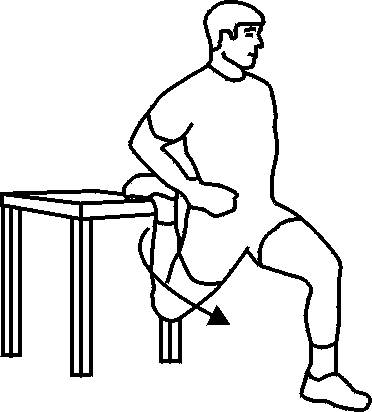
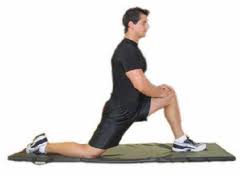
Hip Flexor stretch: Push down with this until you feel it in your hip joint.
Calf Stretch:
Hamstring Stretch: This one will kill most of you, try to activate your quad and keep your leg as straight as possible, also point your toes toward you for a tighter stretch.

Groin Stretch: To make this one harder push your hips back.
Upper Body Stretch:
Chest Stretch
Back Stretch: